The Unexpected Stop: When California Road Trips Go Sideways
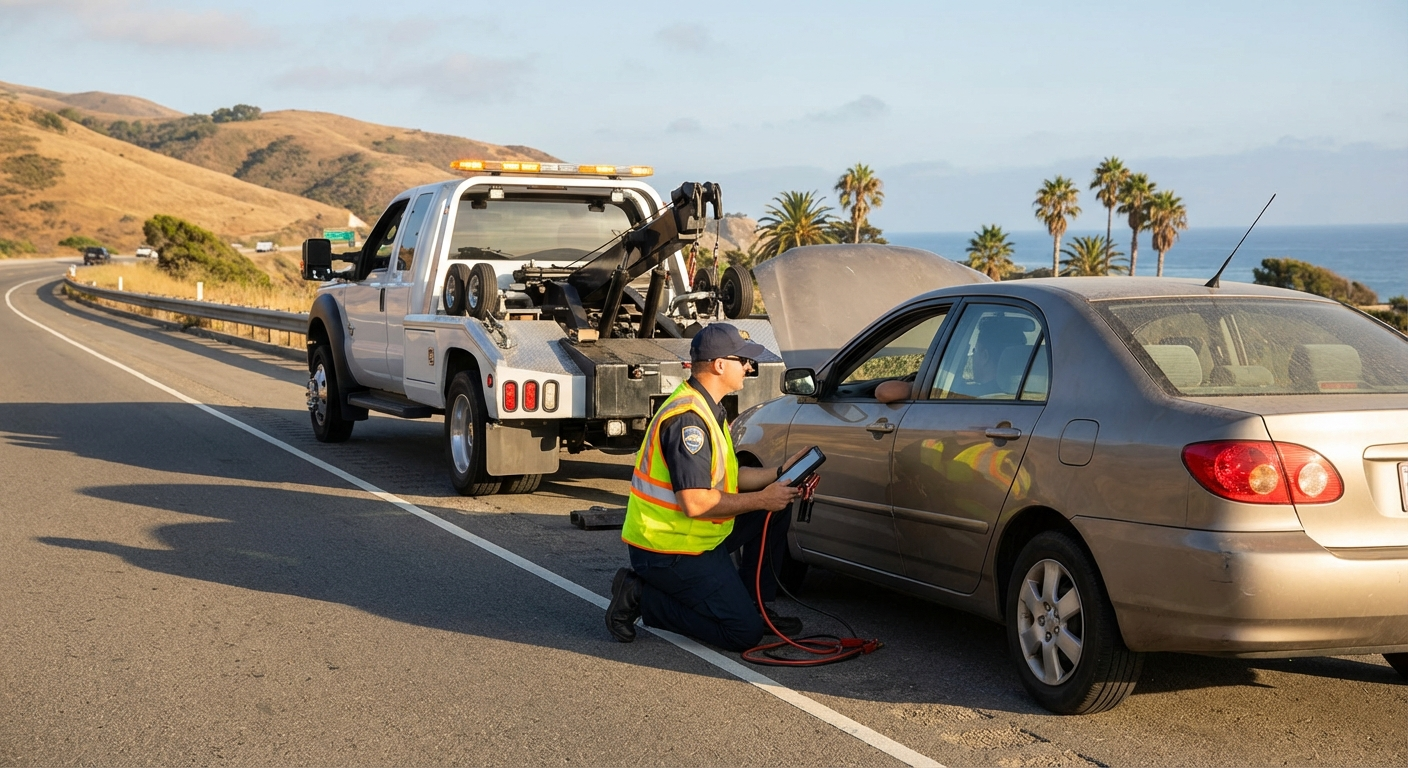
Imagine the Miller family. They’re packed up, kids in the back, heading south from Ventura County down the I-5, maybe aiming for Disneyland, or perhaps a quiet beach town in San Diego. The sun’s shining, classic rock’s playing, windows down. It’s a perfect California afternoon. Then, a shudder. A strange thumping sound from the front. Before Mr. Miller can even process it, the car lurches, and the steering wheel fights back. He pulls over onto the dusty shoulder. Flat tire. Not just any flat, but one that looks like it’s been through a war zone.
Suddenly, that perfect afternoon turns into a sweaty, frustrating mess. The spare’s under a pile of luggage. The jack’s stiff. The kids are asking “Are we there yet?” every thirty seconds. That feeling of helplessness? It’s real. It hits hard, especially when you’re miles from a service station, the cars whizzing by at 80 miles an hour.
Here’s where a little planning makes a big difference. This is exactly why California car insurance roadside assistance isn’t just a nice-to-have; it’s often a sanity-saver. It’s the quiet promise that even when things go completely wrong on the highway, someone’s got your back.
What Even Is Roadside Assistance?
Honestly, it’s exactly what it sounds like: help when your car decides to stop working by the side of the road. Most people think of a tow truck. And yes, a tow is a big part of it. But it’s often much more.
Maybe you’ve run out of gas on a lonely stretch of Highway 395, heading up to Mammoth. Happens. Perhaps your battery decided to give up the ghost in a crowded supermarket parking lot in the Inland Empire. That’s not the whole story. What if you locked your keys in the car? Or, like the Millers, you’ve got a flat tire, and you’re just not equipped or able to change it yourself. These aren’t just minor inconveniences; they’re genuine disruptions to your day, sometimes even safety concerns.
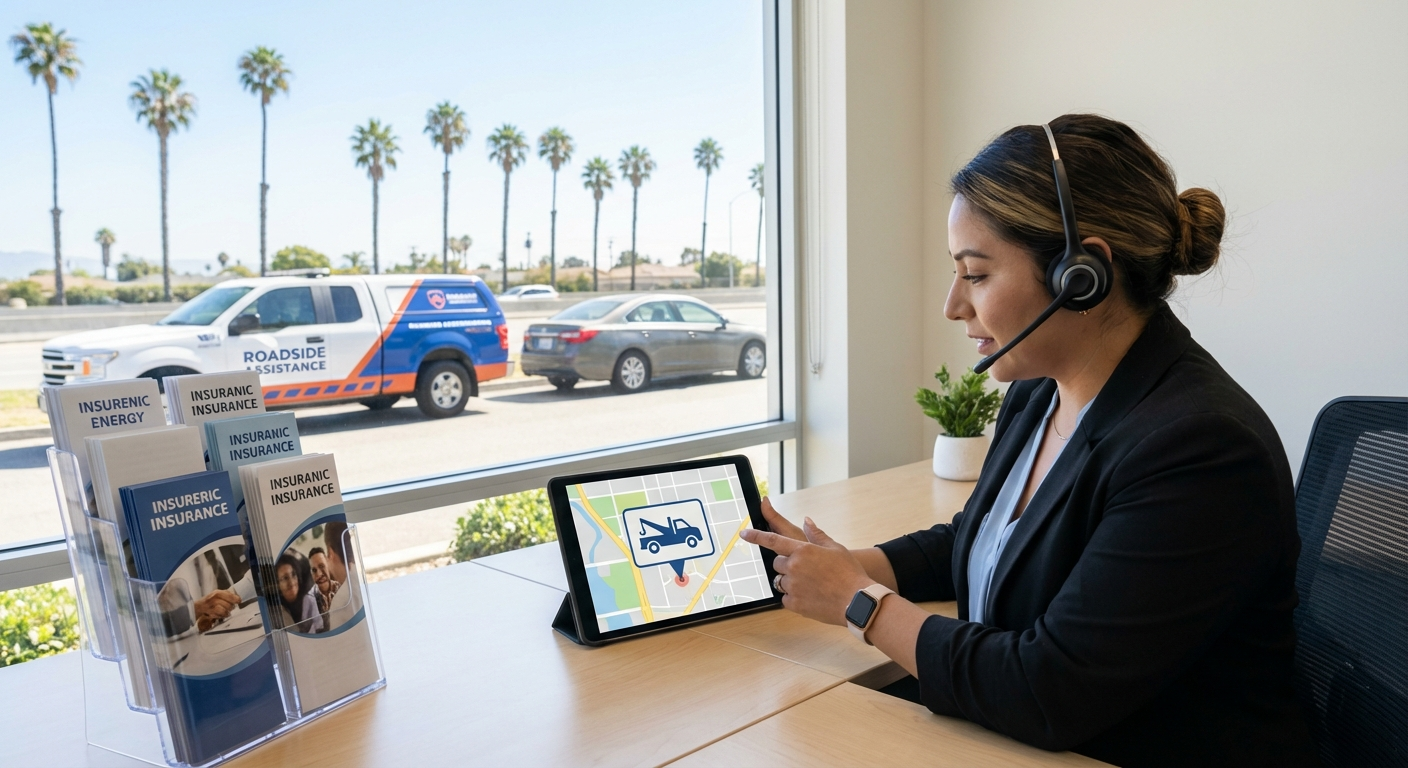
Roadside assistance steps in to fix those immediate problems. It’s like having a reliable friend on call, 24/7, ready to dispatch help right to your location.
More Than Just a Tow Truck
Okay, so what can this service actually do? You’d be surprised by the range.
* **Towing:** This is the big one. If your car won’t start or can’t be driven safely, they’ll tow it to the nearest qualified repair shop. Many policies have a mileage limit — say, 15 or 25 miles. Go beyond that, and you might pay the difference. It’s worth checking those specifics.
* **Flat Tire Service:** They’ll send someone to change your flat tire with your spare. If you don’t have a spare, or it’s unusable, they can often tow you to a tire shop.
* **Battery Jump-Start:** Dead battery? They’ll come give you a jump. Simple, effective.
* **Fuel Delivery:** Ran out of gas? They’ll bring you enough fuel to get to the nearest gas station. You typically pay for the gas itself, but not the delivery.
* **Lockout Service:** Locked your keys inside your car? They can send a professional to help you get back in.
* **Minor Mechanical Adjustments:** Sometimes, it’s something small, like a loose battery cable. They might be able to fix it on the spot.
Think about the cost of just one of these services if you called a random tow company in the middle of the night. A tow from Orange County to a shop could easily be a few hundred dollars. Suddenly, the small annual premium for roadside assistance looks like a bargain.
Your Car Insurance Policy: The First Place to Look
For most people, adding roadside assistance to their existing auto insurance policy is the easiest and most affordable way to get this coverage. It’s usually an optional add-on, a line item you can select when you first sign up or renew.
Most major insurers in California — think State Farm, Farmers, GEICO, Progressive, AAA itself — offer it. It’s not a hidden secret; it’s right there in their menu of options. The cost is often surprisingly low, sometimes just a few dollars a month, or maybe $20-$50 per year added to your overall premium. That’s a pretty small price for peace of mind, especially when you’re driving through the vastness of the Central Valley or navigating the winding roads of the Sierra Nevada foothills.
Is It Worth the Extra Few Bucks?
The short answer is yes. The real answer is more complicated.
Consider the alternative. You’re stranded. You pull out your phone, search for “tow truck near me.” You call the first number that pops up. They quote you $150 for a five-mile tow, plus a $75 hook-up fee. Suddenly, your $30 annual roadside assistance premium sounds like a steal. A single incident could easily cost you five to ten times what you’d pay for the yearly coverage.
But here’s the thing. Some people rarely break down. They’ve got a new car, religiously maintain it, and only drive short distances. For them, maybe the odds of needing it are low. Others drive older cars, put on a lot of miles, or frequently travel through less-populated areas. For them, it’s almost a no-brainer. It’s a gamble, sure. But it’s a gamble with pretty good odds of paying off if you ever find yourself in a bind.
AAA and Other Standalone Options: The Other Side of the Coin
You don’t *have* to get roadside assistance through your car insurance. Many Californians immediately think of AAA. And for good reason. AAA has been a fixture on California roads for over a century. They offer robust membership plans that include roadside assistance, travel benefits, discounts, and sometimes even insurance products.
Other motor clubs exist, too. Even some credit card companies offer limited roadside assistance as a perk for their cardholders.
Which brings up something most people miss. Standalone memberships, like AAA, often offer higher towing mileage limits or more service calls per year than what you’d get through your insurance policy. They can be a bit more expensive annually, but the benefits might be more comprehensive if you’re a frequent traveler or drive an older vehicle.
Checking the Fine Print
No matter where you get it, understanding what you’re actually paying for matters. Not all roadside assistance is created equal.
* **Towing Limits:** How many miles will they tow you for free? What’s the charge per mile after that?
* **Number of Service Calls:** Are you limited to, say, four service calls per year? What happens if you need a fifth?
* **Specific Exclusions:** Do they cover winching if you slide into a ditch? What about roadside repairs beyond a simple jump-start?
* **Vehicle Eligibility:** Does it cover all drivers in your household, or just the policyholder? Is it tied to the vehicle or the driver?
These little details can make a huge difference when you’re stuck on the side of the road in the middle of a triple-digit summer day in Palm Springs.
California’s Unique Driving Challenges
Driving in California isn’t just driving. It’s an experience. We’ve got it all: the dense, stop-and-go traffic of the Bay Area and Los Angeles, where a breakdown can quickly turn into a massive headache for everyone. We have the scorching desert highways, like the ones leading to Joshua Tree or Las Vegas, where heat can cook an engine or blow a tire. Then there are the winding mountain roads of Big Sur or the Sierras, beautiful but often remote, where cell service can be spotty.
Imagine a breakdown on a remote stretch of Highway 1, far from any town. Or your car overheating in gridlock on the 101 in the Valley during rush hour. These aren’t just hypothetical scenarios; they’re common occurrences for millions of Californians. And if you’re ever caught in one of those unexpected situations, you’ll be glad you planned ahead.
How to Get the Right Coverage: Asking the Experts
Choosing the right roadside assistance, and the right car insurance in general, can feel a bit overwhelming. There are so many options, so many companies, so many policy nuances. This is where an independent insurance agent like Karl Susman comes in.
Karl, with Save on Car Insurance California, CA License #OB75129, isn’t tied to one specific insurance company. He works with multiple carriers. This means he can compare different policies, different roadside assistance packages, and different price points to find something that truly fits your needs and budget. He’s seen it all, from minor fender-benders in Santa Monica to full-on breakdowns in the high desert. He knows the ins and outs of California insurance.
He can explain the differences between an insurer’s basic roadside coverage and a more extensive AAA membership. He can help you understand the towing limits, the number of service calls, and whether it makes sense for your driving habits. Don’t guess. Talk to someone who knows the system.
For a clear picture of your options and what might suit you best, you can easily get a quote and talk through it. Visit https://susmaninsurance.com/get-a-quote/.
When You Need It Most: What Happens During a Breakdown
Let’s go back to the Millers, stuck on the I-5 with that shredded tire. Mr. Miller, after a moment of frustration, remembers they added roadside assistance to their policy through Save on Car Insurance California. He pulls out his phone, opens the insurance app, or calls the dedicated roadside assistance number.
A friendly voice answers. He explains the situation, gives their location. Within minutes, a service vehicle is dispatched. The app even gives them an estimated time of arrival. Twenty minutes later, a professional pulls up. He quickly and efficiently changes the tire, checks the pressure on the others, and offers a quick once-over. The Millers are back on the road, kids pacified, parents relieved. Total out-of-pocket cost for the roadside service? Zero.
That peace of mind? It’s priceless. It means less stress, less wasted time, and a safer situation for you and your family.
Beyond the Basics: What Else Should Californians Consider?
In California, insurance isn’t always straightforward. We have unique regulations, like Proposition 103, which affects how rates are set. We deal with specific challenges, like wildfires impacting homeowners insurance, which can sometimes indirectly affect auto policies as insurers adjust their overall portfolio. The point is, your insurance needs aren’t static.
Reviewing your car insurance policy regularly is smart. Your driving habits change. Your car ages. New insurance products come out. Maybe you’ve moved from a quiet suburb to a bustling city, or vice-versa. Your existing coverage might not be the best fit anymore. And if you’ve never considered roadside assistance, maybe now’s the time.
Don’t wait until you’re stranded on a dark road in the middle of nowhere to figure it out. Being proactive about your insurance coverage means you’re prepared for whatever California’s roads throw at you.
Thinking about your auto insurance? Get a personalized quote and see how easy it is to make sure you’re properly protected. Visit https://susmaninsurance.com/get-a-quote/.
Frequently Asked Questions About California Roadside Assistance
What exactly does car insurance roadside assistance cover?
Most policies will cover common roadside issues like flat tire changes, battery jump-starts, fuel delivery if you run out of gas, lockout services if you lock your keys in the car, and towing if your vehicle is undrivable. The specific mileage limits for towing and the number of service calls allowed per year can vary by insurer and policy.
Is it better to get roadside assistance through my car insurance or a separate membership like AAA?
It depends on your needs. Getting it through your car insurance is often the most cost-effective option, typically adding a small amount to your annual premium. Standalone memberships like AAA might offer more extensive benefits, such as higher towing mileage limits, more service calls, and additional perks like travel discounts, but they usually come with a higher annual membership fee. It’s a good idea to compare the details of both to see which offers the best value for your driving habits.
How much does roadside assistance typically cost in California?
When added to an existing car insurance policy, roadside assistance is usually quite affordable, often just a few dollars a month or between $20-$50 per year. Standalone memberships, like those from AAA, generally range from $60-$120 per year or more, depending on the membership tier and benefits included.
Will using roadside assistance services increase my car insurance premium?
Generally, using roadside assistance for non-accident related issues (like a flat tire or dead battery) doesn’t directly increase your car insurance premium. These services are typically considered convenience benefits rather than claims that indicate higher risk. However, some insurers might track usage, and very frequent calls *could* theoretically be noted, but it’s rare for it to directly impact your rates unless tied to a broader pattern of claims.
What should I do if my car breaks down in a remote part of California?
First, try to safely pull your vehicle off the road as far as possible. Turn on your hazard lights. If you have roadside assistance through your car insurance or a motor club, call their dedicated service number or use their mobile app. Provide your exact location – cross streets, highway markers, or even GPS coordinates can be helpful. If cell service is spotty, try moving to a slightly higher elevation if safe, or sending a text message which sometimes works when calls don’t. Always prioritize your safety and stay in your vehicle if it’s safe to do so, especially in remote areas or at night.
This article is for informational purposes only and does not constitute financial advice.