
Your California Drive: Understanding Auto Insurance
Driving in California is an experience all its own. From cruising the coast on Highway 1 to navigating the freeways of the Inland Empire, our roads see it all. But what happens if something goes wrong? A fender bender in the Valley, a scraped bumper in a tight Ventura County parking lot, or worse, a serious collision. That’s where auto insurance steps in, and honestly, it can feel like a maze. You’ve got options, requirements, and a whole lot of jargon. Let’s make some sense of it.
Most people think of car insurance as just “full coverage” or “the minimum.” But it’s far more detailed than that. Your policy is really a collection of different protections, each designed for a specific kind of problem. And what you choose can make a world of difference if you ever need to file a claim.
The Foundation: Liability Coverage
Every driver in California needs liability insurance. It’s the law. Think of it as your responsibility coverage. If you cause an accident, this is the part of your policy that pays for the damage you do to other people and their stuff. It doesn’t cover your own car or your own injuries. That’s a common misunderstanding.
Bodily Injury Liability
This one’s for the other people involved. If you’re at fault in a crash, bodily injury liability helps pay for the medical expenses, lost wages, and pain and suffering of anyone you injure. California sets minimum limits you must carry — typically $15,000 for injury or death to one person, and $30,000 for injury or death to more than one person in a single accident.
But here’s the thing. Those minimums are really, really low. A trip to the ER alone can easily eat up $15,000, let alone an ambulance ride, surgery, or weeks of physical therapy. What if you hit a car full of people? If your policy limits run out, you’re personally on the hook for the rest. Your savings, your home, your future earnings — all could be at risk. Many drivers, especially those with assets to protect, choose much higher limits. It’s often not that much more expensive to bump up to $100,000/$300,000 or even $250,000/$500,000. It’s a small price for real peace of mind.
Property Damage Liability
This covers the damage you do to someone else’s property. Most often, that’s their car. But it could also be a streetlight, a fence, someone’s mailbox, or even the side of a building. California’s minimum for property damage is just $5,000.
Five thousand dollars. Think about that for a second. Have you seen the cost of repairing a newer car? Even a minor bumper repair on a late-model SUV can blow past $5,000 in a blink. If you total someone’s Honda Civic, you’ll be significantly short. Just like with bodily injury, if your limits are too low, you’ll be paying out of pocket.
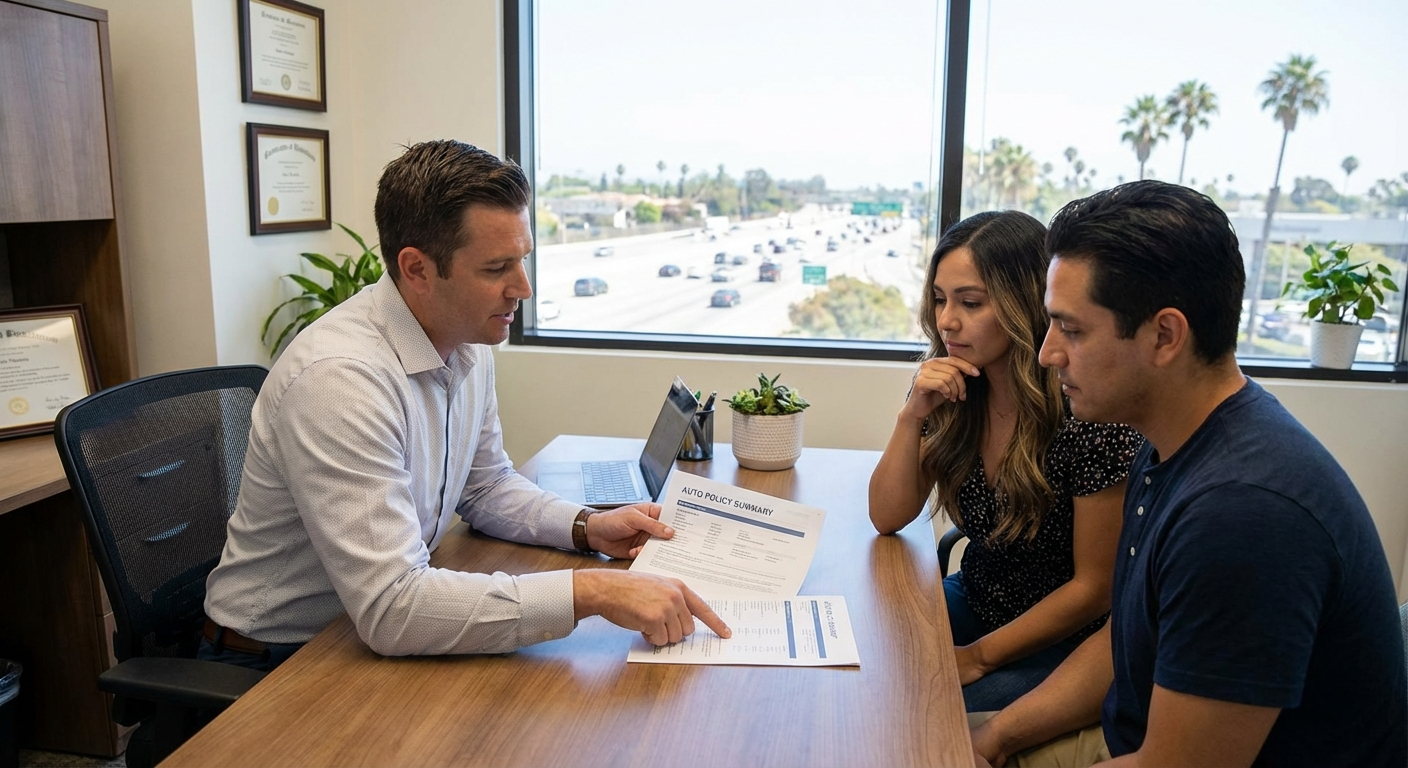
Protecting Your Ride: Collision and Comprehensive
If you want your own car covered, you’ll need to add collision and comprehensive insurance. These are optional coverages, unless you have a car loan or lease — then your lender will almost certainly require them.
Collision Coverage
This kicks in when your car hits another vehicle or an object, or if your car rolls over. It also covers you if someone hits your car, and it’s determined to be your fault. Or, if you’re hit by an uninsured driver and don’t have Uninsured Motorist Property Damage (more on that in a moment).
Imagine you’re backing out of your driveway and ding a tree. Collision covers that. You’re in a freeway pileup, and you’re deemed partially at fault. Collision helps with your car’s repairs. You’ll choose a deductible — typically $500 or $1,000 — which is the amount you pay out of pocket before your insurance starts paying. A higher deductible usually means a lower premium.
Comprehensive Coverage
This is sometimes called “other than collision” coverage. It covers almost everything else that could happen to your car when it’s not involved in a crash. We’re talking theft, vandalism, fire, falling objects (like a tree branch during a storm), and even damage from animals.
Here in California, with our wildfires, comprehensive coverage is incredibly important. If your car is damaged by smoke or flames during an evacuation from, say, the next big fire in the canyons above Los Angeles, comprehensive would cover it. It also has a deductible, just like collision.
Uninsured and Underinsured Motorist Coverage: A California Must-Have
This is where it gets interesting. California has a lot of drivers without insurance. A lot. Which brings up something most people miss. Even if you have the best liability insurance in the world, what happens if *they* hit *you*, and they don’t have coverage?
Uninsured Motorist (UM) and Underinsured Motorist (UIM) coverage is designed for exactly this scenario.
* **Uninsured Motorist Bodily Injury (UMBI):** This pays for your medical bills, lost wages, and pain and suffering if an uninsured driver hits you. It also covers your passengers.
* **Uninsured Motorist Property Damage (UMPD):** This covers damage to your car if an uninsured driver hits you. It often has a much lower deductible than collision, or no deductible at all.
* **Underinsured Motorist (UIM):** This protects you if the at-fault driver has insurance, but their limits aren’t high enough to cover all your damages. Your UIM coverage would then kick in to cover the difference, up to your policy limits.
Honestly, in California, UM/UIM is one of the most important coverages you can buy. Don’t skip it.
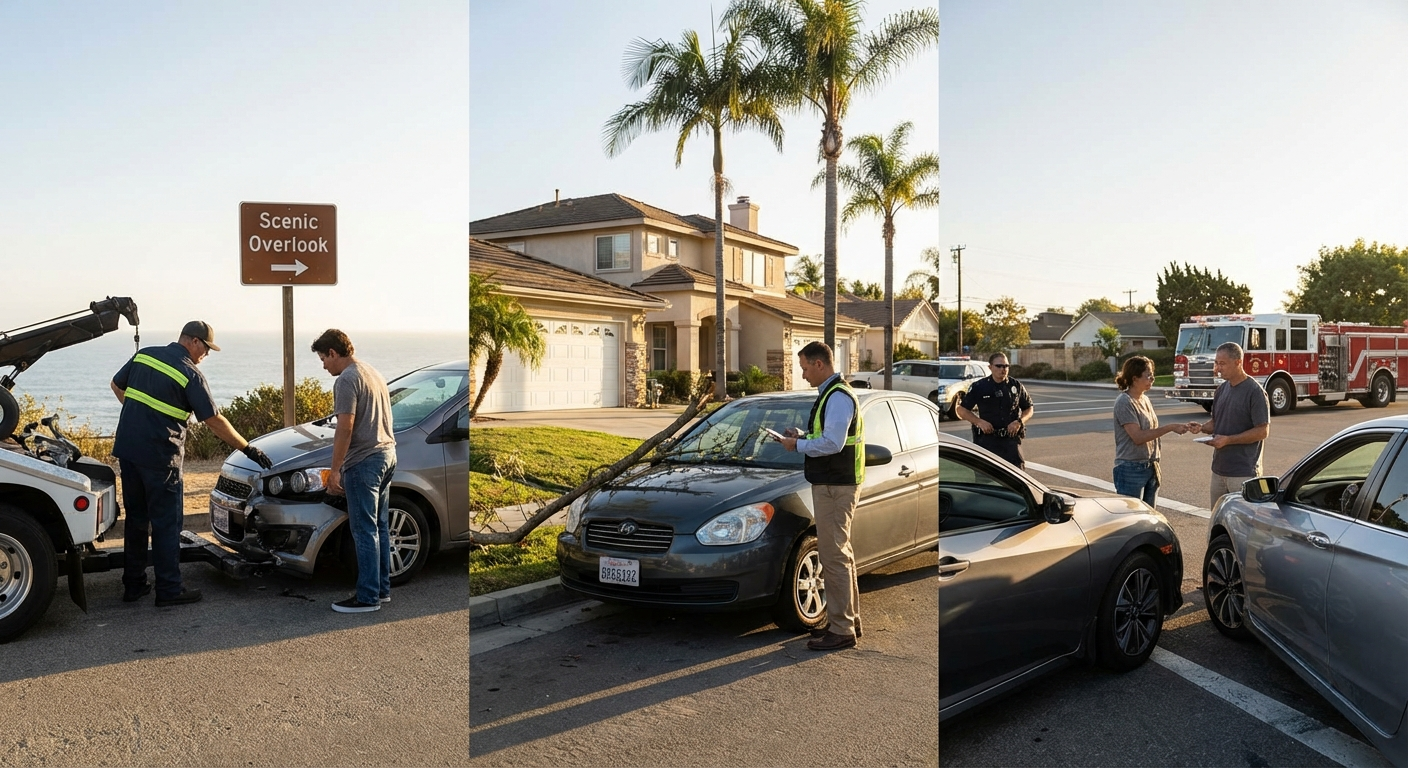
Other Handy Coverages You Might Want
Beyond the core protections, there are a few other options that can make life a lot easier if you find yourself needing to file a claim.
* **Medical Payments (MedPay):** This is a no-fault coverage that pays for medical expenses for you and your passengers, regardless of who caused the accident. It’s often a small amount, like $1,000 or $5,000, but it can quickly cover ambulance rides or initial emergency room visits.
* **Rental Car Reimbursement:** When your car is in the shop after a covered accident, who pays for a rental? This coverage does. It typically has a daily limit (e.g., $30/day) and a maximum per incident.
* **Roadside Assistance:** Flat tire? Dead battery? Locked your keys in the car on a hot day in Palm Springs? Roadside assistance can be a lifesaver. It usually covers towing, jump-starts, tire changes, and fuel delivery.
* **Gap Insurance:** If you have a brand-new car and financed or leased it, gap insurance is worth considering. If your car is totaled, standard insurance pays out its actual cash value — what it was worth right before the accident. But new cars depreciate fast. You might owe more on your loan than the car is worth. Gap insurance covers that “gap” between what you owe and what your car is worth.
California’s Unique Insurance Climate
California isn’t just any state when it comes to insurance. We’ve got a massive population, lots of traffic, and unique challenges that impact what your auto insurance covers and how much it costs. Prop 103, for instance, passed back in 1988, gives the state’s Insurance Commissioner the power to approve or reject rate changes. It’s meant to keep insurers in check, but it also creates a complex regulatory environment.
Sometimes, this means insurers like State Farm, AAA, or Farmers might adjust their offerings or even pull back from certain markets. For example, the increasing frequency and severity of wildfires across areas like Ventura County and the Sierra foothills have made some parts of California harder or more expensive to insure for homeowners, and sometimes that ripples into auto insurance decisions for bundled policies.
Choosing What’s Right for You
So, what does all this mean for you? It means taking an honest look at your driving habits, your car, and your financial situation. Do you drive an older car that’s paid off? Maybe higher deductibles make sense. Do you have a new car and a long commute? Then comprehensive, collision, and higher liability limits are probably a smart move.
Don’t just grab the cheapest policy you can find. That minimum coverage might satisfy the law, but it could leave you financially ruined after a serious accident. It’s about protecting your assets and your future, not just your car.
Finding the right balance can feel like a lot. An independent agent like Karl Susman at Save on Car Insurance California, CA License #0B75129, can help you sort through all the options. We’re here to understand your specific needs and help you build a policy that truly protects you on California’s roads. Give us a call at (877) 411-5200, or if you’re ready to explore your options right now, you can get a quote here: https://saveoncarinsurancecalifornia.com/get-a-quote/.
Frequently Asked Questions About California Auto Insurance
Q: What are the absolute minimum auto insurance requirements in California?
A: California requires drivers to carry at least $15,000 for injury/death to one person, $30,000 for injury/death to more than one person, and $5,000 for property damage. This is often referred to as 15/30/5 coverage.
Q: Is “full coverage” a real type of policy?
A: “Full coverage” isn’t an official insurance term. It’s a common phrase people use to mean they have collision and comprehensive coverage, along with their state-mandated liability. It generally implies a more robust policy than just the minimum liability.
Q: Does my auto insurance cover me if I drive for a ride-sharing service like Uber or Lyft?
A: Generally, your personal auto insurance policy won’t cover you when you’re driving for a ride-sharing service. These companies usually provide some insurance for their drivers, but it’s often segmented (e.g., different coverage when waiting for a fare versus actively carrying a passenger). You might need a special “rideshare endorsement” or a commercial policy. Always check with your insurer and the ride-sharing company.
Q: If my car is stolen, does my insurance pay for a rental car?
A: If you have comprehensive coverage, your insurance will pay for the stolen car’s value (minus your deductible). However, to cover a rental car while your claim is being processed, you’d need to have opted for “rental car reimbursement” coverage on your policy.
Q: My rates went up a lot recently. Why is this happening in California?
A: Many factors can cause rates to rise, including a poor driving record, new claims, or moving to a higher-risk area. On a broader scale in California, insurers have been dealing with rising costs for car repairs (more complex technology, supply chain issues), increased medical costs for injuries, and a higher number of claims overall. Sometimes, these trends lead to statewide rate increases. An independent agent like Karl Susman can often help you explore different options and find ways to save.
The right auto insurance isn’t just a legal requirement; it’s a financial safety net for you and your family. Don’t leave it to chance. When you’re ready for a personalized look at your auto insurance options, reach out to Karl Susman and the team at Save on Car Insurance California, CA License #0B75129. You can call us directly at (877) 411-5200, or get your free quote online today: https://saveoncarinsurancecalifornia.com/get-a-quote/.
This article is for informational purposes only and does not constitute financial advice.