
What You’ll Learn:
- Why your personal auto policy won’t cut it for business use in California.
- The different kinds of commercial auto insurance and what they cover.
- California’s specific rules and how they affect your policy.
- What makes your commercial auto premiums go up or down.
- How to prepare for getting a quote and why an agent makes a big difference.
Your Business on California’s Roads: Why Commercial Auto Insurance Isn’t Optional
You’ve got a business here in California. Maybe you’re a contractor hauling tools across Ventura County, a caterer delivering meals in the Valley, or a consultant driving clients around downtown Sacramento. Whatever your hustle, if you’re using a vehicle for anything beyond your daily commute or a weekend trip to Tahoe, your personal auto insurance policy likely won’t cover you if something goes wrong. Not a chance, really.
Many business owners, especially those just starting, make a common mistake. They figure, “It’s my car, my policy.” But here’s the thing: insurance companies draw a very sharp line between personal and commercial use. Cross that line without the right coverage, and you could face financial ruin after an accident. We’re talking about huge out-of-pocket costs, lawsuits, and a business brought to its knees. That’s a nightmare nobody wants.
So, let’s talk about how to protect your California business on wheels. It’s not as scary as it sounds, but it does require some specific knowledge. This guide will walk you through the ins and outs, giving you a roadmap to make sure your commercial vehicles are properly covered.
Step 1: Figuring Out What “Commercial Use” Really Means in California
It sounds simple, right? If you’re using your car for work, it’s commercial. But the definition can get a little fuzzy, and the stakes are high. Insurers look at a few key things to decide if your vehicle use crosses into commercial territory.
Are you transporting goods or people for a fee? That’s a pretty clear “yes.” Think delivery drivers, ride-share operators, or shuttle services. Even if you’re just delivering your own products, like a baker taking cakes to a client, that’s business use.
Do you regularly carry equipment, tools, or supplies related to your business? A landscaper with mowers in the truck bed, a plumber with pipes and wrenches, an electrician with ladders on the roof rack – these are all signals of commercial use. It’s not just about the vehicle itself; it’s about what you’re doing with it.
Is your vehicle owned or leased by your business? Or is it registered in your business’s name? That’s another strong indicator. Even if you’re a sole proprietor and the vehicle is still technically in your name, if its primary purpose is business, you need commercial coverage.
Sometimes, the line blurs. What if you occasionally drive to a client meeting in your personal car? Most personal policies might offer limited coverage for “business travel,” but this is usually for office-type work, not heavy hauling or frequent, dedicated business driving. The short answer is yes, sometimes it’s okay. The real answer is more complicated. If it’s a regular part of your income-generating activity, you’re probably leaning commercial.
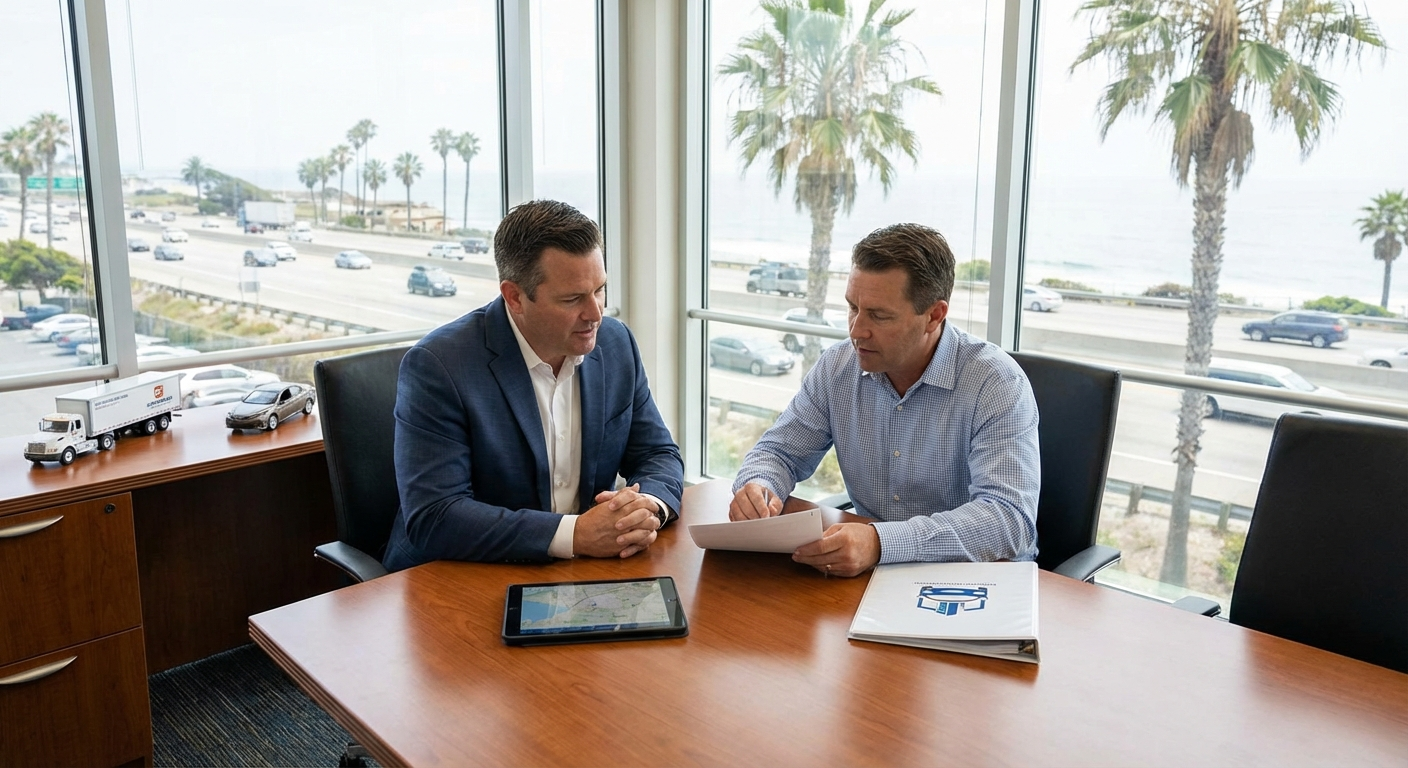
Step 2: The Different Kinds of Commercial Auto Policies You Might Need
Just like personal insurance, commercial auto isn’t a one-size-fits-all product. There are several categories, and the right one depends on your business’s specific needs.
Business Auto Policy (BAP)
This is the most common type. A BAP covers vehicles used for general business purposes – a contractor’s truck, a florist’s van, a real estate agent’s car. It can cover a single vehicle or a small fleet. Most small businesses in California will start here.
Commercial Fleet Insurance
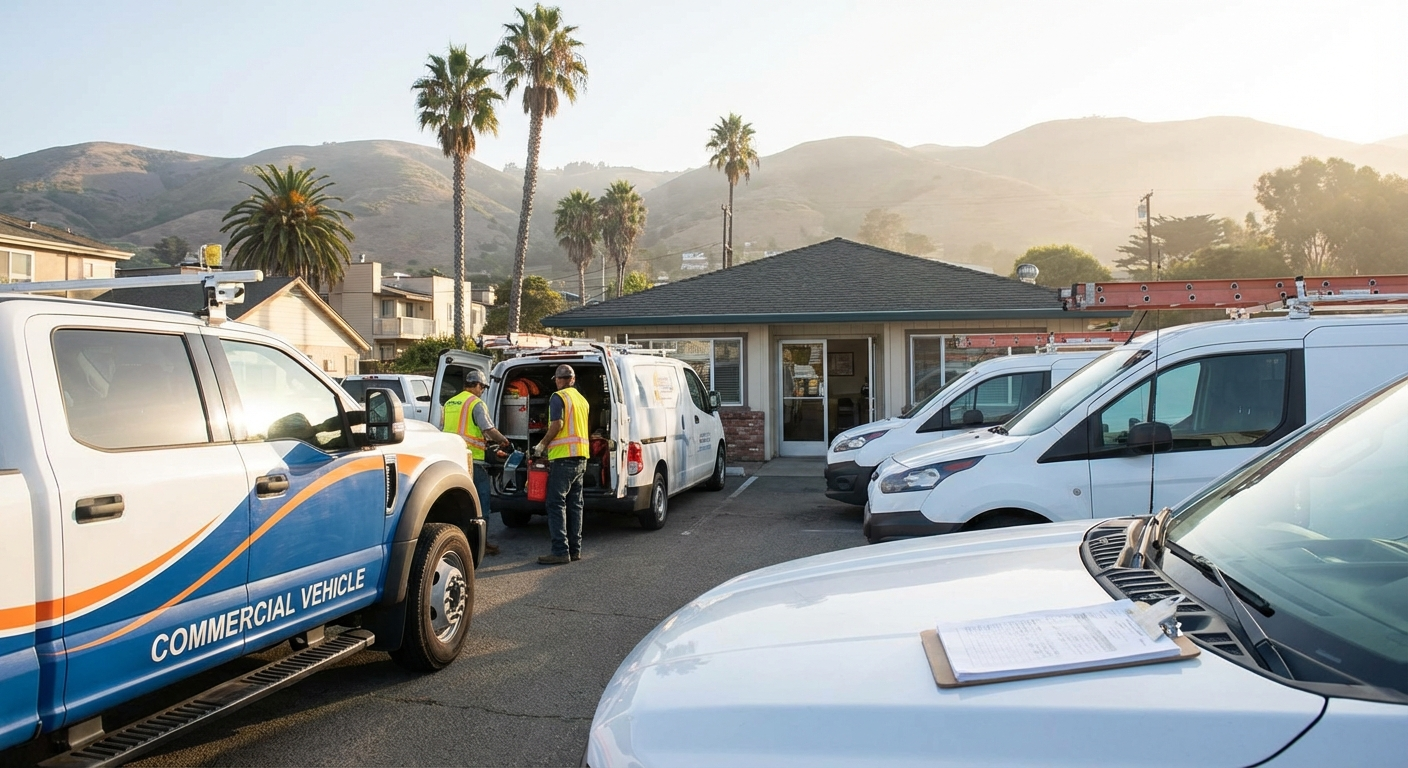
If your business has multiple vehicles – say, five or more – you’ll likely look at fleet insurance. This streamlines coverage for all your vehicles under one policy, often offering better rates and simpler management. Think about a plumbing company with ten vans or a moving company with a dozen trucks operating across the state.
For-Hire Transportation (e.g., Trucking, Ride-Share, Taxi)
This is a highly specialized area. If you’re a long-haul trucker, a taxi service, or a ride-share driver, you’ll need specific “for-hire” coverage. These policies carry much higher liability limits and often require filings with the California Public Utilities Commission (PUC) or other regulatory bodies. Ride-share drivers, for instance, often need a specific endorsement or separate policy to cover the gap between their personal policy and when the ride-share app’s coverage kicks in.
Specialty Commercial Vehicles
Got a food truck? A cement mixer? A tow truck? These specialized vehicles require even more tailored policies due to their unique risks and often higher values. Their coverage needs are vastly different from a standard delivery van.
Step 3: Key Coverage Components You’ll Absolutely Need
Many of the coverage types sound familiar from your personal policy, but the limits and implications are much, much bigger for commercial use.
Commercial Auto Liability
This is non-negotiable. Liability coverage pays for damages and injuries you cause to others in an accident where your business vehicle is at fault. In California, minimum liability limits are pretty low for personal vehicles ($15,000 per person / $30,000 per accident for bodily injury, and $5,000 for property damage). For a business, these limits are woefully inadequate. A single accident can lead to hundreds of thousands, even millions, in damages and legal fees. You’ll want to aim for much higher limits – often $1 million or more – to protect your business assets.
Collision Coverage
Pays for damage to your own business vehicle if it hits another object or vehicle. If your truck is essential for your livelihood, you can’t afford to be without this. It gets you back on the road faster.
Comprehensive Coverage
Covers damage to your business vehicle from non-collision events like theft, vandalism, fire, natural disasters (think about those wildfires near Santa Clarita or flooding in the Central Valley), or hitting an animal. Given California’s varied geography and risks, this is super important.
Uninsured/Underinsured Motorist (UM/UIM)
California has a lot of uninsured drivers. This coverage protects your business and its drivers if an at-fault driver doesn’t have enough, or any, insurance to cover your damages and medical bills. It’s a smart addition, especially with so many cars on the 405 or the 80.
Medical Payments (MedPay) or Personal Injury Protection (PIP)
These cover medical expenses for you and your passengers, regardless of who’s at fault. While PIP isn’t standard in California (it’s a “fault” state), MedPay is available and can be a lifesaver for immediate medical costs after an accident. Workers’ comp will also play a role if employees are involved.
Cargo Coverage
If you’re hauling goods, this is essential. It protects the products or materials you’re transporting from theft, damage, or loss. Imagine losing a truckload of expensive construction materials or high-value electronics. Big difference.
Step 4: California’s Specific Rules and Regulations
California isn’t just a state; it’s a world unto itself when it comes to insurance regulations. These rules can significantly impact your commercial auto policy.
Proposition 103
This ballot initiative, passed in 1988, regulates insurance rates in California. It requires insurers to get approval from the Department of Insurance before implementing rate changes. This means rates can’t just jump without oversight, but it also means the market can be slower to adapt to changing conditions. Recently, some insurers have scaled back their offerings in California because of these regulations, making it harder to find certain types of coverage. Premiums jumped 40% between 2022 and 2024 for many personal lines, and commercial lines felt the squeeze too.
DMV Requirements
The California DMV has specific insurance requirements for registering commercial vehicles. Make sure your policy meets these minimums, though as we discussed, you’ll want much higher limits.
PUC/TCP Filings
If your business involves transporting passengers or goods for hire (like trucking companies, taxis, limos, or even certain types of delivery services), you’ll likely need to register with the California Public Utilities Commission (PUC) and get a TCP (Transportation Charter Party) permit. This often requires specific insurance filings that prove you have adequate coverage, usually with much higher liability limits than standard commercial auto.
Geographic Impact
Where your business operates matters. An identical policy for a delivery van operating primarily in downtown Los Angeles will likely cost more than one operating in a less congested area like Redding or the Central Valley. Why? More traffic, higher accident rates, and greater potential for large claims. The risk profile changes dramatically from the Bay Area to the Inland Empire.
Step 5: What Makes Your Commercial Auto Premiums Go Up (or Down)?
Several factors play into how much you’ll pay for commercial auto insurance. Understanding them can help you manage costs.
Vehicle Type and Use: A heavy-duty dump truck will cost more to insure than a small sedan used for sales calls. Vehicles with higher value, greater weight, or specialized equipment carry more risk.
Driver Records: The driving history of everyone who operates your business vehicles is a huge factor. Accidents, tickets, and DUIs on an employee’s record will drive premiums up. Insurers like State Farm, AAA, and Farmers all look closely at this.
Industry and Business Type: Some industries are inherently riskier. A construction company operating heavy machinery has a different risk profile than a consulting firm. Delivery services, especially those with tight schedules, often face higher premiums due to increased road time and pressure.
Location: As mentioned, urban centers with high traffic density and higher rates of theft or vandalism (like parts of Oakland or downtown LA) will generally have higher premiums than rural areas.
Coverage Limits and Deductibles: Higher liability limits mean higher premiums, but they also mean better protection. Choosing a higher deductible (the amount you pay out-of-pocket before insurance kicks in) can lower your premium, but be sure you can afford that deductible if an accident occurs.
Claims History: A history of frequent claims will almost certainly lead to higher premiums. Maintaining a good safety record is one of the best ways to keep costs down.
Step 6: Getting the Right Quote – What to Prepare
When you’re ready to get a commercial auto insurance quote, being prepared will make the process smoother and ensure you get accurate pricing. Don’t just call up and say, “How much for a truck?”
First, gather detailed information about your business. This includes your business name, address, industry, and how long you’ve been in operation. Insurers want to know who they’re dealing with.
Next, compile information on all vehicles you want to insure. You’ll need the make, model, year, VIN (Vehicle Identification Number), and estimated annual mileage for each. Also, specify how each vehicle is used – for example, “delivery,” “sales calls,” “hauling equipment,” or “passenger transport.”
Then, list all drivers. For each, you’ll need their full name, date of birth, driver’s license number, and their driving record for the past three to five years. Any accidents or violations? Be upfront about them. Hiding information only leads to problems down the road.
Finally, consider the coverage you need. Think about those liability limits, collision, comprehensive, and any specialized coverages like cargo. An experienced agent can help you determine appropriate limits based on your business’s assets and risk exposure.
Step 7: The Role of an Experienced Agent in California
Could you try to piece together commercial auto insurance on your own? Maybe. But it’s often a headache, and you risk missing critical coverages or overpaying. Here’s where an independent insurance agent, especially one focused on California commercial lines, becomes invaluable.
An agent like Karl Susman of Save on Car Insurance California (CA License #0B75129) knows the California market inside and out. They understand the nuances of Prop 103, the specific requirements for different business types, and which insurers are currently offering the best rates and coverage for your particular situation. They don’t just sell you a policy; they help you build a protection strategy.
They can shop multiple carriers for you – not just one – comparing quotes from different companies to find the best fit and value. This saves you hours of phone calls and research. More importantly, they can explain the fine print, identify potential gaps in coverage, and help you understand the true cost of an underinsured accident. That’s not the whole story. They’re also there for you if you need to file a claim, acting as your advocate with the insurance company.
Protecting your business means protecting its assets, and for many California businesses, vehicles are core assets. Don’t leave it to chance. Getting the right commercial auto insurance is a smart business decision.
Ready to get a quote? Don’t hesitate to reach out to Karl Susman at Save on Car Insurance California. You can call his team at (877) 411-5200 or start your quote online here.
Frequently Asked Questions About California Commercial Auto Insurance
Q1: Can I just add a “business use” endorsement to my personal policy?
Honestly, rarely. While some personal policies offer limited endorsements for certain types of business use (like a real estate agent driving clients), these are typically very restrictive and don’t cover common commercial activities like hauling goods, making deliveries, or using specialized equipment. For true commercial use, a separate commercial policy is almost always required and recommended. Trying to stretch a personal policy to cover business risks is a huge gamble.
Q2: What if my employees use their own cars for my business? Do I need coverage?
Yes, you absolutely do. This is a common situation and a big area of exposure for businesses. Even if your employees use their personal vehicles, your business can still be held liable for accidents they cause while on company business. This is often covered by a “non-owned and hired auto” liability policy, which protects your business from claims arising from accidents involving vehicles you don’t own but use for business purposes. It’s a smart addition to any business’s insurance portfolio.
Q3: Is commercial auto insurance more expensive than personal auto insurance in California?
Generally, yes. Commercial auto insurance tends to be more expensive because the risks are higher. Commercial vehicles often log more miles, carry more passengers or cargo, operate in higher-risk environments, and face greater liability exposure. The potential for large claims is significantly greater, which is reflected in the premiums. But wait — the cost is an investment in protecting your business from potentially catastrophic financial losses.
For a personalized quote and expert advice on your California commercial auto insurance needs, visit our quote page today or call Karl Susman at Save on Car Insurance California at (877) 411-5200. CA License #0B75129.
This article is for informational purposes only and does not constitute financial advice.