
Here’s what you’ll learn in this guide:
- Why California teen driver insurance rates are so incredibly high.
- The step-by-step process of getting a teen insured in California, from permit to full license.
- The specific factors that make your premium jump or drop.
- Actionable discounts you can actually get.
- How to find the right insurance company for your family.
The Sticker Shock is Real: Understanding Teen Driver Rates in California
You’ve probably heard the rumors. Maybe you’ve even seen a quote. Adding a teen driver to your California car insurance policy isn’t just expensive; it can feel like you’re buying a second car payment. Honestly, it’s one of the biggest jumps most families will see in their insurance costs. But why? What makes insuring a 16-year-old in, say, Orange County so much pricier than insuring a 30-year-old in the same place?
It all boils down to risk. Insurers look at data, and that data paints a pretty clear picture: new drivers, especially young ones, are simply more likely to get into accidents. Their brains are still developing, they lack experience, and they’re more prone to distraction. In California, with our busy freeways, often aggressive drivers, and strict distracted driving laws that teens sometimes struggle to follow, that risk factor gets amplified.
The numbers don’t lie. Statistically, drivers under 20 have the highest crash rates of any age group. And when they do crash, the accidents are often more severe. So, when an insurance company in, say, the Inland Empire calculates your premium, they’re not just guessing. They’re looking at decades of actuarial science telling them that a new teen driver is a significant liability. That’s the cold, hard truth of it.
Step 1: The California Graduated Driver Licensing Program
Before your teen can even think about driving solo, they have to navigate California’s Graduated Driver Licensing (GDL) program. It’s a system designed to ease new drivers into the complexities of the road, giving them supervised experience before they get too much freedom. And it directly impacts when and how you’ll add them to your policy.

The Learner’s Permit Stage (Age 15½)
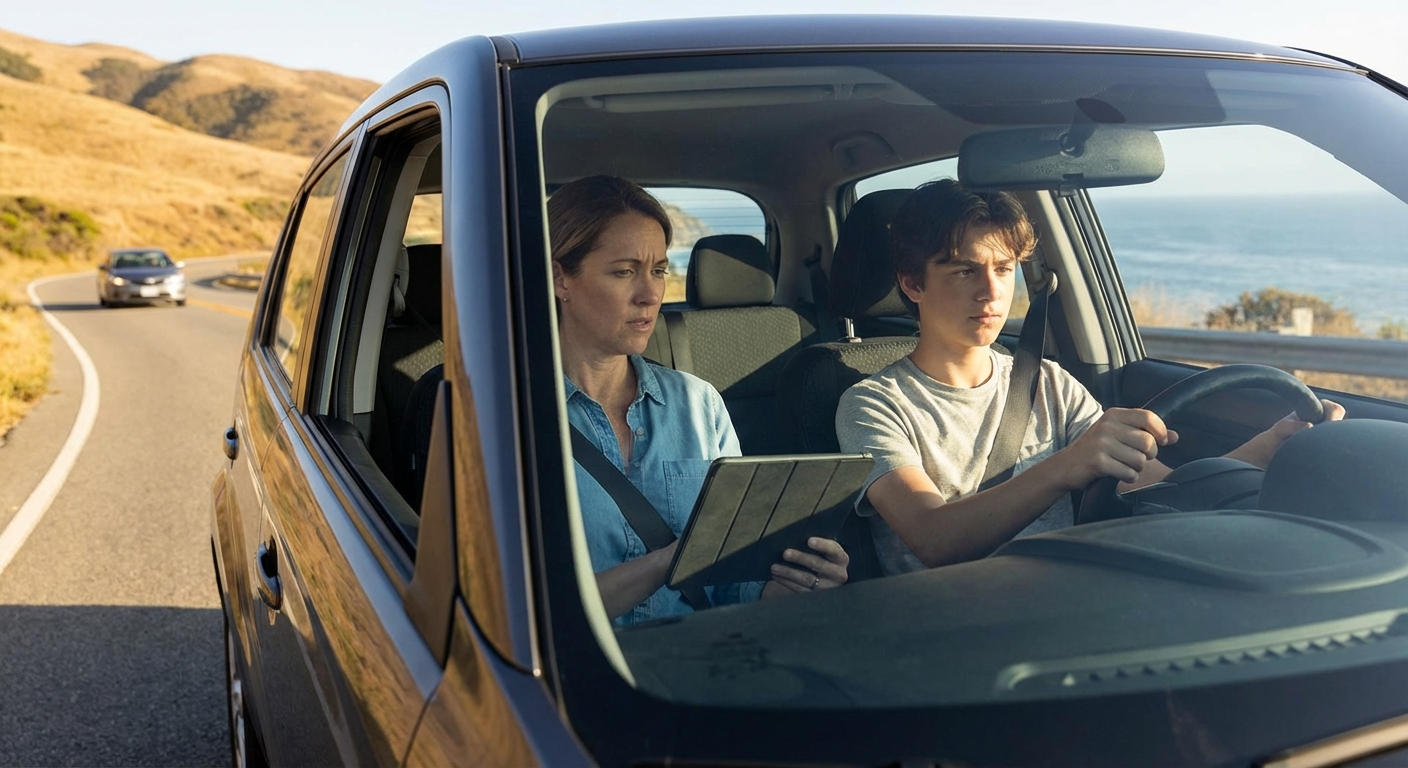
At 15 and a half, your teen can apply for a learner’s permit. They’ll need to pass a written test. Once they have that permit, they can drive, but only with a licensed California driver 25 years or older in the passenger seat. This adult has to be awake and alert, ready to take over if needed. Your teen also needs to complete 6 hours of professional driver training and 50 hours of supervised driving practice (10 of which must be at night). This stage is crucial for building foundational skills. You’ll want to notify your insurance company when your teen gets their permit, though some policies automatically cover permit holders as long as they’re supervised.
The Provisional License Stage (Age 16)
After turning 16, holding their permit for at least six months, and completing all the required training and supervised hours, your teen can take their driving test. Pass that, and they get a provisional license. This is where the real insurance implications kick in. For the first 12 months, or until they turn 18 (whichever comes first), there are some important restrictions:
- No driving between 11 p.m. and 5 a.m.
- No driving with passengers under 20 years old in the vehicle, unless a licensed driver 25 or older is present.
These restrictions are designed to reduce risk during the most dangerous driving times and situations for teens. Here’s where it gets interesting. Some insurers offer discounts if your teen adheres strictly to these rules, or they might even factor these restrictions into the initial quote. You absolutely must add your teen to your policy once they have this provisional license. Failure to do so could mean no coverage if they get into an accident.
The Full, Unrestricted License Stage (Age 18)
Once your teen turns 18, the provisional restrictions lift. They now have a full California driver’s license. This doesn’t mean their insurance rates immediately plummet, but it’s a step in the right direction. With more experience under their belt, and assuming a clean driving record, you’ll start to see a gradual decrease in premiums over the next few years.
Step 2: Adding Your Teen to Your Policy — Or Not?
Most California families choose to add their teen driver to an existing family policy. It’s usually the most straightforward and cost-effective option. But it’s not the only one, and there are some things you need to consider.
The Family Policy Advantage
When you add a teen to your policy, they typically benefit from the multi-car discounts, multi-policy discounts (if you bundle home and auto), and your established driving history. This usually softens the blow of those high teen rates. Your insurer will likely assign the teen as a driver to one of your existing vehicles, often the least valuable one if you have multiple cars. But wait — this doesn’t mean they’re only covered in that car. They’re generally covered when driving any car on your policy, or even a borrowed car, as long as they have permission.
It’s important to be upfront with your insurance agent. Don’t try to hide your teen driver to save money. If an accident happens and your insurer finds out you intentionally didn’t disclose a licensed driver in your household, they could deny your claim. That’s a financial catastrophe you absolutely want to avoid.
Separate Policy? Not Always Practical
Could a teen get their own policy? Technically, yes, but it’s rare and almost always more expensive. Without the benefit of multi-car or bundling discounts, and with zero driving history, a standalone policy for a 16 or 17-year-old would likely be astronomical. Sometimes, if a teen lives in a different household or has a very specific situation, it might be explored, but for most families, it’s not a practical solution.
Step 3: Factors That Drive Up (and Down) the Price
Being a teen is the biggest factor, sure. But it’s not the only one. Many other elements play a role in that final premium number. Understanding these can help you make smarter choices.
The Car Your Teen Drives
This is a big one. A flashy sports car or a high-end SUV will cost way more to insure for a teen than a used, reliable sedan. Insurers look at a few things:
- Safety Ratings: Cars with excellent safety ratings (think airbags, stability control) often get lower rates because they protect occupants better, reducing injury claims.
- Cost to Repair: Expensive parts and complex systems mean higher repair costs after an accident.
- Theft Risk: Certain models are more frequently stolen, pushing up comprehensive coverage costs.
- Horsepower: Faster cars are associated with higher risk. It’s just how it works.
So, if you’re buying a car for your teen, think practical. A 2012 Honda Civic or a Toyota Corolla might not be glamorous, but it’s a smart insurance choice. A new Tesla, on the other hand, will likely be a budget-buster.
Where You Live
California is a huge state, and location matters. Someone living in a dense, high-traffic area like downtown Los Angeles or parts of San Francisco will likely pay more than someone in a quieter, more rural town in Mendocino County. Higher population density means more cars, more traffic, and more chances for accidents. Crime rates in your specific zip code also factor in, affecting comprehensive and collision coverage.
Driving Record (Theirs and Yours)
This seems obvious, right? A clean driving record for your teen is gold. Even one speeding ticket or minor fender bender can send rates soaring and keep them high for years. But here’s the thing: because your teen is on your policy, your driving record matters too. If you have a few tickets or accidents, that can indirectly affect the overall family premium, even if your teen’s record is spotless.
Good Grades
Yes, really! Many insurers offer a “good student discount” for teens who maintain a B average or higher. Why? Because data suggests that responsible students tend to be more responsible drivers. It’s a small discount, but every little bit helps when rates are this high. Make sure your teen keeps those report cards looking good.
Driver Training and Telematics
Completing extra driver training courses beyond the state minimum can sometimes earn a discount. These courses teach advanced defensive driving techniques. Here’s where it gets interesting: many insurers now offer telematics programs – devices or apps that monitor driving habits (speeding, hard braking, late-night driving). If your teen demonstrates safe driving habits through one of these programs, you could see a discount. The downside? Some parents aren’t comfortable with the constant monitoring, and if your teen drives poorly, it could actually increase your rates.
Step 4: Discounts You Can Actually Get
Don’t just accept the first quote you get. There are legitimate ways to chip away at those high premiums. You just have to know what to ask for.
- Good Student Discount: As mentioned, a B average or higher can save you some cash.
- Driver Education/Training Discount: Beyond the required courses, extra defensive driving classes can sometimes qualify.
- Multi-Car Discount: If you have more than one car on your policy, you’re likely already getting this. Adding your teen’s car (or assigning them to one of yours) keeps this discount in play.
- Bundling Discounts: This is a big one. If you have your home, renters, or even life insurance with the same company as your auto policy, you can often save a significant amount.
- Safety Features Discount: Cars with anti-lock brakes, airbags, anti-theft devices, and other safety tech often get a break.
- Low Mileage Discount: If your teen doesn’t drive much – maybe just to school and back – some insurers offer a discount.
Step 5: Finding the Right Insurer
This is arguably the most important step. Not all insurance companies treat teen drivers the same way. Some are more aggressive with their pricing, while others might offer better discounts or programs tailored to young drivers. You absolutely need to shop around.
Don’t just stick with your current insurer out of habit. While loyalty sometimes pays off, when adding a teen, it’s a whole new ballgame. Your current company might have been great for you, but they might not be the best fit for a new young driver. State Farm, AAA, Farmers, Geico, Progressive – they all have different pricing models and discount structures.
Which brings up something most people miss: The value of an independent insurance agent. Someone like Karl Susman at Save on Car Insurance California (CA License #0B75129) doesn’t work for just one company. He works for you. An independent agent can compare quotes from multiple insurers at once, sifting through the fine print to find the best combination of coverage and price for your family. They understand the nuances of the California market, like the impact of Prop 103, and can guide you through the process. You can reach Karl Susman at (877) 411-5200.
Ready to see what options are out there? Get a personalized quote today and compare rates from top California insurers.
Step 6: What Happens After the First Year?
The good news? Teen driver rates don’t stay sky-high forever. As your teen gains experience and matures, their rates will gradually decrease. The biggest drops usually happen around age 18, and then again significantly at 20 and 25. A clean driving record is your teen’s best friend here. Every year they drive without tickets or accidents, their rates should improve.
Keep encouraging safe driving habits, good grades, and remind them that their future insurance costs are directly tied to their actions behind the wheel today. That’s a powerful motivator. And remember to periodically re-evaluate your coverage with your agent. As your teen gets older and more experienced, you might find new discounts or better rates available.
Don’t wait for your renewal notice to check for better rates. Start comparing quotes now and ensure you’re getting the best deal for your family.
Frequently Asked Questions
Q: Can a teen get their own car insurance policy in California?
A: While technically possible, it’s highly uncommon and almost always more expensive. Insurers usually prefer to add teens to an existing family policy to spread the risk and apply multi-car or bundling discounts. A standalone policy for a minor would be incredibly costly.
Q: How much does car insurance for a teen driver cost in California?
A: This is the million-dollar question, and there’s no single answer. Rates vary wildly based on location (Ventura County vs. San Jose, for instance), the type of car, the insurer, the teen’s grades, and the family’s driving history. You’re typically looking at a substantial increase to your existing premium, often hundreds of dollars a month, at least initially. The best way to know is to get a quote.
Q: Do good grades really make a difference for teen car insurance?
A: Yes, they absolutely can! Many California insurance companies offer a “good student discount” for teens who maintain a B average (3.0 GPA) or higher. It’s not a huge discount, but it can help offset some of the high costs. It’s a way for insurers to reward responsible behavior.
Q: What if my teen drives an older, less valuable car? Will that save money?
A: It can definitely help. Insuring an older car typically means lower collision and comprehensive coverage costs because the car is cheaper to repair or replace. If the car is paid off, you might even consider dropping collision/comprehensive to save money, though that comes with its own risks. The car’s safety features still matter, even if it’s an older model.
Q: How does California’s Proposition 103 affect teen driver rates?
A: Prop 103, passed in 1988, requires insurers to base rates primarily on driving record, miles driven, and years of experience, rather than just zip code. For teen drivers, this means their lack of experience and higher accident rates (based on actuarial data) are heavily weighted. It also provides consumer protections and requires insurers to justify rate increases, but it doesn’t eliminate the inherent risk associated with new, young drivers.
The road to insuring a teen driver in California can feel like a bumpy one, full of unexpected turns and high tolls. But with a bit of planning, a lot of research, and the right help, you can navigate it successfully.
This article is for informational purposes only and does not constitute financial advice.