The Miller Family’s Unexpected Detour: A California Roadside Story
The smell of pine needles and warm asphalt filled the Miller family’s minivan as they climbed the winding roads toward Yosemite. Sunlight dappled through the redwoods. Seven-year-old Lily was humming along to the radio, while her older brother, Jake, was deep in a graphic novel. Dad, Mark, had the maps app open, but he knew this stretch of Highway 140 like the back of his hand. They’d planned this trip for months, a much-needed escape from the hustle of their home in the Inland Empire.
Then, a cough. A sputter. The minivan bucked once, twice, and then just… died.
Mark wrestled the wheel to pull over onto the narrow shoulder, dust kicking up around them. The silence that followed felt heavy, broken only by Lily asking, “Are we there yet?” Her voice was small. This wasn’t the plan. No cell service. Just towering trees and the faint sound of a distant creek. Panic started to prickle at the edges of Mark’s calm. He’d checked the oil, the tires. But sometimes, cars just decide they’re done for the day. This is where a good plan, a good safety net, makes all the difference. This is where California car insurance roadside assistance steps in.
When the Wheels Stop Turning: What Exactly Is Roadside Assistance?
Imagine you’re driving along PCH, windows down, enjoying the ocean breeze near Big Sur. Suddenly, a sickening thud. You’ve got a flat tire. Or maybe you’re stuck in rush hour traffic on the 101 in the Valley, and your engine starts smoking. Perhaps you’re heading out for a weekend in Lake Tahoe and accidentally lock your keys in the car at a deserted rest stop.
These aren’t accidents. They’re mechanical hiccups, human errors, or just plain bad luck. And they can leave you stranded, sometimes in the middle of nowhere, sometimes in the middle of gridlock. Roadside assistance is that service that swoops in. It’s often an add-on to your car insurance policy, but it offers a surprisingly wide range of help.
What kind of help? Think about the basics:
- Towing: Your car’s dead, like the Miller’s minivan. A tow truck comes to haul it to the nearest mechanic or a specific repair shop within a certain mileage.
- Flat Tire Changes: You might have a spare, but changing it on the side of a busy freeway or a dark country road isn’t everyone’s idea of a good time. Someone comes to do it for you.
- Fuel Delivery: You misjudged the distance to the next gas station in Death Valley. A few gallons get brought to you.
- Lockout Service: Keys inside the car? Happens to the best of us. A locksmith or technician arrives to get you back in.
- Jump Starts: Dead battery? They’ll bring the cables and get you going.
For the Millers, stuck without cell service, just knowing someone *could* eventually come was a comfort. But getting that help often means knowing exactly what your roadside assistance covers and how to call it in.
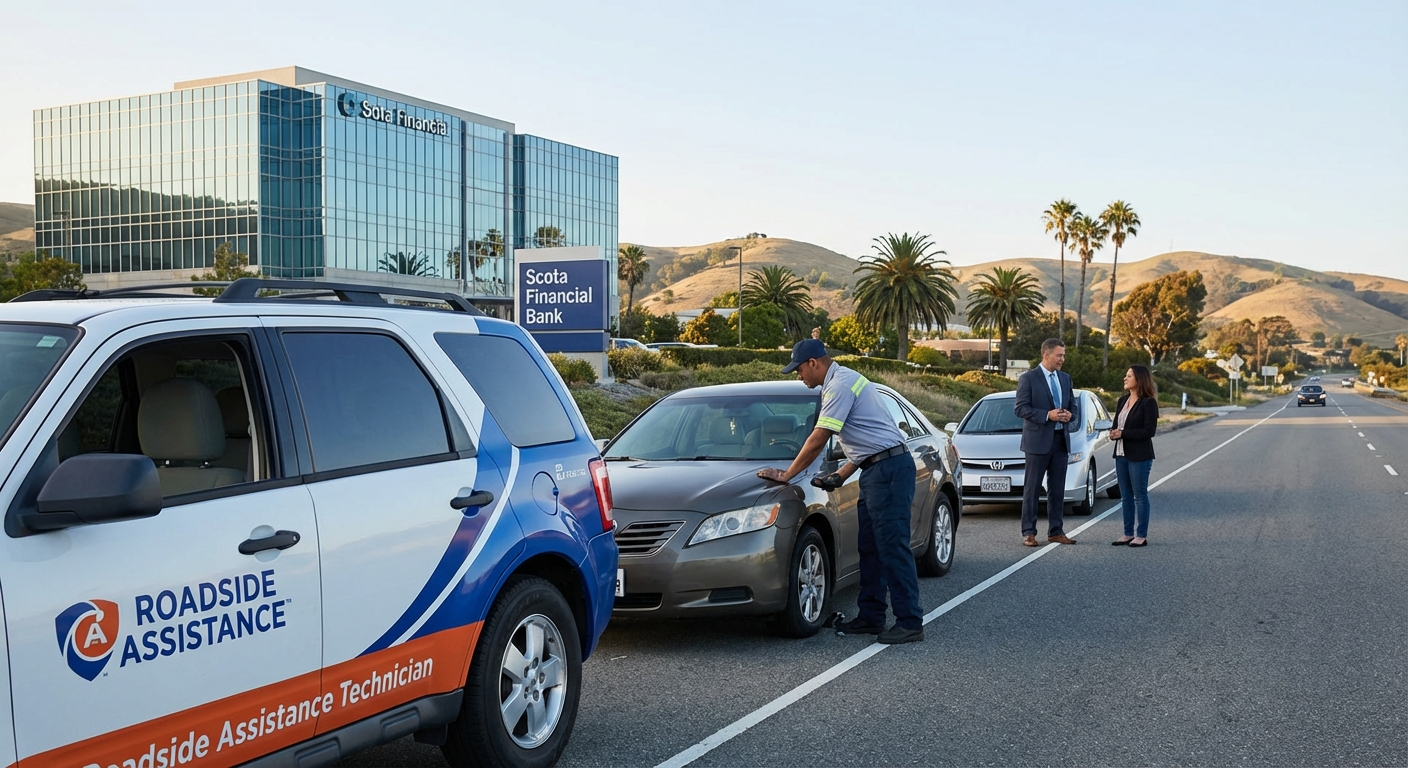
Your Options: Where Does Roadside Help Come From?
Most people don’t think about roadside assistance until they really need it. Then, they scramble. But here’s the thing: you probably have more options than you realize. It’s not a one-size-fits-all solution, especially in a state as vast and varied as California.
1. Adding It to Your Car Insurance Policy
For many, this is the most straightforward path. When you buy car insurance from companies like State Farm, Farmers, Progressive, or Geico, you can usually add roadside assistance for a small extra fee. We’re talking maybe a few dollars a month, sometimes even less. It’s an easy box to check during the sign-up process.
The benefits are clear: it’s convenient, bundled with your existing coverage, and often budget-friendly. You make one call to your insurance provider, and they dispatch help. Simple.
But wait — there are often limits. Most insurance-backed roadside plans have restrictions on towing mileage – perhaps 15 or 20 miles. That’s fine if you break down in downtown San Diego, where mechanics are plentiful. But if your car gives up the ghost near the Grapevine on I-5, or a rural road in Sonoma County, 15 miles won’t even get you to the next town, let alone a repair shop. You’ll pay out of pocket for the extra distance. There might also be a cap on how many times you can use the service in a year, typically three or four calls. If you’ve got an older car prone to issues, those limits can feel tight.
An independent agent, someone like Karl Susman at Save on Car Insurance California, CA License #OB75129, can show you how different carriers structure their roadside offerings. They don’t work for one company, so they can compare all the fine print for you.
Ready to see what roadside options fit your California lifestyle? Get a quote today with Save on Car Insurance California.
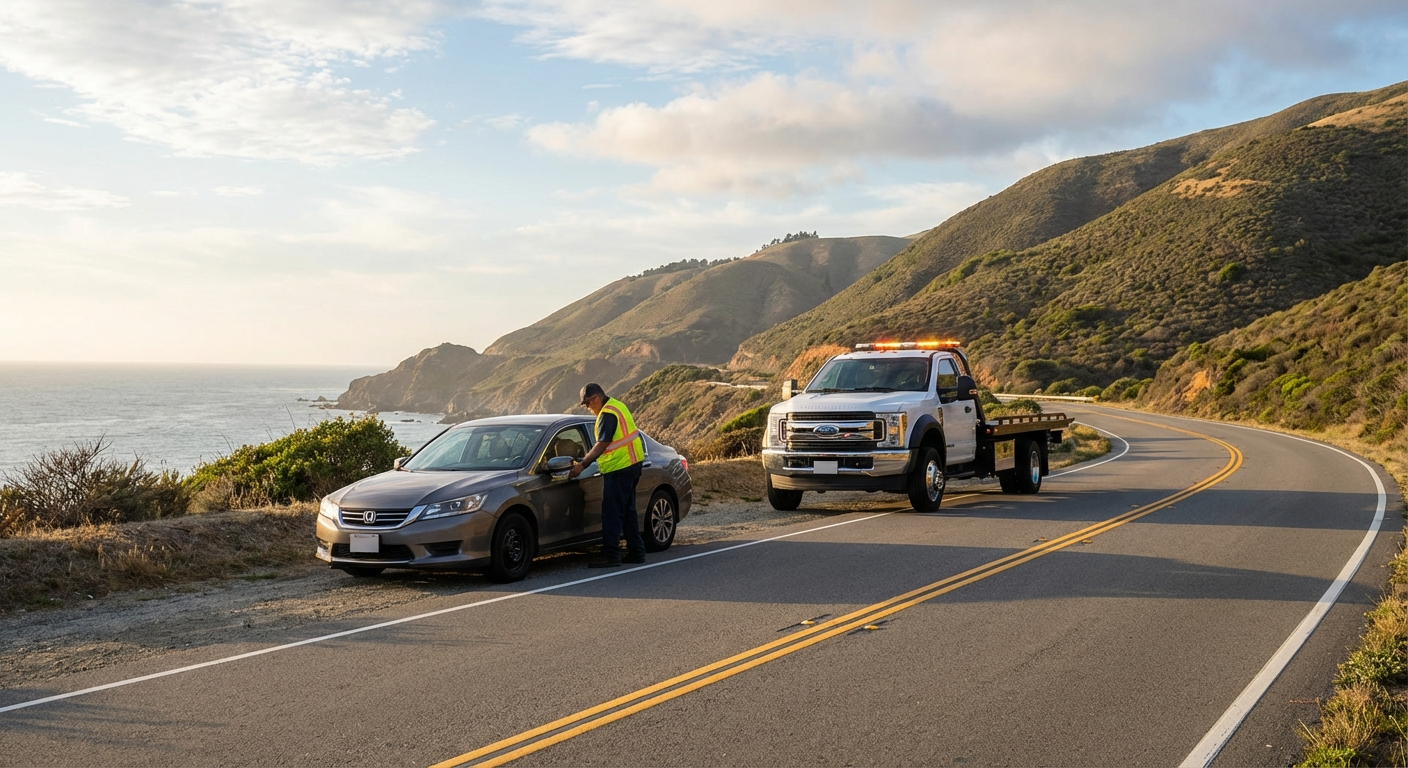
2. Standalone Memberships Like AAA
Ah, AAA. For generations, they’ve been the go-to for roadside help. In California, they’re practically an institution. A standalone membership, separate from your car insurance, is what they offer.
The trade-off? You pay an annual membership fee, which is usually more than the small add-on to your insurance. But for that higher cost, you often get more generous benefits. Think longer towing distances – 100 miles or even more, depending on your membership level. More service calls per year. Sometimes, they even offer additional perks like discounts on hotels, rental cars, and travel planning services. If you’re a road warrior, constantly driving long distances across the state, from Eureka down to El Centro, or frequently head to remote areas, a AAA membership might be worth every penny.
The short answer is yes. The real answer is more complicated. It’s about how much you value those extended benefits versus the cost.
3. Credit Card Benefits and Car Warranties
Here’s where it gets interesting. Many premium credit cards, especially those with travel rewards, quietly offer some form of roadside assistance as a perk. It’s often basic – a tow up to a few miles, a jump start – but it’s *free*. You just have to remember you have it and how to access it.
New cars are another place to check. Most new vehicles come with manufacturer-backed roadside assistance for a few years, usually tied to the car’s warranty. This is often a surprisingly robust service, sometimes matching or exceeding basic insurance add-ons. You don’t want to double-pay for something you already have. Check your owner’s manual or call your dealership to see if you’re covered.
Picking Your Lifeline: What to Consider
Choosing the right roadside assistance isn’t just about the cheapest option. It’s about peace of mind. It’s about what makes you feel secure on California’s diverse and sometimes challenging roads.
How Often Do You Drive? Where Do You Go?
Someone who commutes daily from Ventura County into downtown Los Angeles has different needs than a retiree who mostly drives their grandkids around Sacramento. If you’re frequently driving across the vast Central Valley, or venturing into the remote mountains of the Sierra Nevada, you’ll want more robust coverage. Breaking down on Highway 395 in the Eastern Sierra can leave you very isolated. A basic 15-mile tow won’t cut it out there.
Think about the Millers, stuck on that remote road to Yosemite. They needed a service that could reach them, even without a strong cell signal, and tow them far enough to get real help.
Towing Limits: Don’t Get Stranded Twice
This is, perhaps, the biggest difference between policies. Imagine your insurance plan offers a 20-mile tow. You break down 50 miles from the nearest town with a mechanic. That means you’re still on the hook for 30 miles of towing, which can easily run into hundreds of dollars. That’s not the whole story. Many tow companies charge premium rates for long hauls, especially if you’re stuck on a weekend or holiday.
AAA or some credit card benefits might offer 100-mile towing. That’s a big difference if you’re far from civilization. It’s worth doing the math on how far you typically drive from services in your usual routes.
Number of Service Calls
Most insurance-backed roadside assistance plans limit you to a few calls per year. For most drivers, that’s plenty. But if you have an older car, or one that’s been giving you trouble, you might hit that limit faster than you think. Maybe you need a jump start in January, a flat tire fixed in April, and then your car won’t start in October. Suddenly, you’ve used your three calls. Any additional calls will be out-of-pocket.
It happens. Especially with older batteries struggling in the extreme heat of places like the Coachella Valley or the deep cold in the mountains.
The Real Cost of Being Unprepared in California
Let’s be blunt: paying for a tow truck out-of-pocket on the spot can sting. A local tow in an urban area might cost you $100-$150. If you’re in a more remote location, or need a longer tow, that bill can easily jump to $300, $500, or even more. That’s a significant hit to your wallet, especially if it’s unexpected.
A few extra dollars a month for roadside assistance often looks like a bargain compared to that kind of surprise expense. It’s not just about the money, though. It’s about the stress, the lost time, and the feeling of helplessness. The Millers didn’t just worry about the cost of the tow; they worried about being stranded with their kids, missing their vacation, and the sheer hassle of it all.
Don’t wait for a breakdown to figure out your options. Get a clear picture of your California car insurance and roadside assistance choices. Connect with Karl Susman, CA License #OB75129, at Save on Car Insurance California, or start your quote here: https://susmaninsurance.com/get-a-quote/
What About Newer Cars?
As we touched on, if you’ve recently bought a new car, you might already have roadside assistance. Most manufacturers offer it as part of their warranty package for the first few years. It often covers all the basics: towing, jump starts, fuel delivery, and lockout service.
Before you add roadside assistance to your insurance policy or sign up for a separate membership, always check your vehicle’s warranty. You don’t want to pay for something you’re already getting for free.
A Word on Independent Agents
Here’s where an independent agent like Karl Susman at Save on Car Insurance California really makes a difference. They don’t have an allegiance to just one insurance company. Instead, they work for *you*. They can look at policies from various carriers – State Farm, AAA, Progressive, Farmers, and others – and compare their roadside assistance offerings side-by-side.
This means you get tailored advice, not just a sales pitch for a single product. They can help you weigh the cost versus the benefits, considering your driving habits, your car’s age, and where you typically travel in California. It’s like having an expert guide navigate the sometimes-confusing world of insurance on your behalf.
FAQ: Your Roadside Assistance Questions Answered
- Does adding roadside assistance make my insurance more expensive?
Usually, it’s a small added cost, often just a few dollars a month. It’s generally much cheaper than paying for a tow out-of-pocket, which can cost hundreds.
- What if I’m not in my own car? Can I still use my roadside assistance?
It depends entirely on your specific policy. Some policies cover *you*, the driver, regardless of the car you’re in. Others cover *the car* listed on the policy, no matter who’s driving. Always check your specific terms to be sure.
- Is there a limit to how many times I can use roadside assistance?
Yes, most insurance policies have a limit, typically 3-4 calls per year. Standalone memberships like AAA often offer more service calls and sometimes more generous towing distances.
- What’s the difference between roadside assistance and car insurance?
Car insurance primarily covers damages, liability, and injuries resulting from accidents. Roadside assistance, on the other hand, deals with non-accident breakdowns: flat tires, dead batteries, lockouts, fuel delivery, and towing for mechanical issues.
When the Miller family finally got their minivan to a mechanic in Mariposa, hours later, they felt a huge wave of relief. It wasn’t just the tow truck showing up; it was knowing they had a plan, a safety net that worked even when their phone didn’t. That’s what good roadside assistance, chosen wisely, gives you on California’s long, beautiful, and sometimes unforgiving roads.
This article is for informational purposes only and does not constitute financial advice.