
Thinking About Your Car Insurance in California? Let’s Talk Collision vs. Comprehensive
If you own a car here in California – whether you’re cruising down the PCH in Malibu or navigating the freeways of the Inland Empire – you know car insurance is a must. But understanding all the pieces of your policy? That’s where it gets tricky for many folks. Two terms often cause a bit of head-scratching: collision and comprehensive coverage. They sound similar, don’t they? Almost like they do the same job.
Honestly, they’re like two different sides of the same coin, each protecting you from a distinct set of problems. Knowing the difference can save you a lot of grief – and potentially a lot of money – if something unexpected happens to your ride.
Collision Coverage: When You Hit Something (Or Something Hits You)
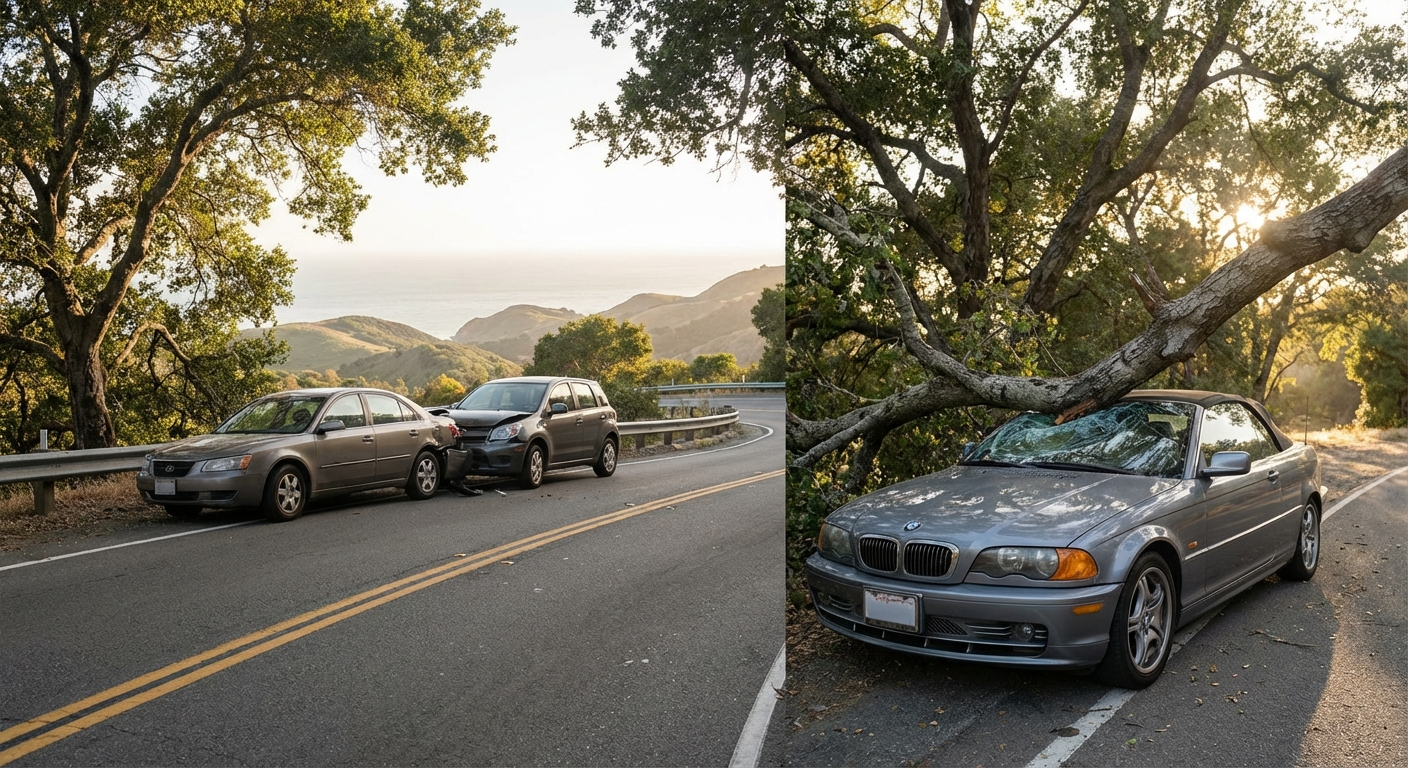
Let’s start with collision coverage. This part of your policy is pretty straightforward. It kicks in when your car collides with another object. That “object” could be another car, a telephone pole, a fence, a tree – you get the idea. It also covers damage from things like rollovers.
Think about it this way: You’re driving through a busy intersection in downtown San Diego, and someone swerves, clipping your fender. Or maybe you misjudge a turn backing out of a tight parking spot at the Westfield Topanga Mall and scrape a concrete pillar. That’s collision coverage at work. It pays for the repairs to your car, minus your deductible.
Most times, if you’re financing or leasing a car, your lender will insist you carry collision coverage. They want their investment protected. And it makes sense. Cars today aren’t cheap to fix. A minor fender bender in Los Angeles can quickly rack up thousands in body shop bills, especially with all the sensors and cameras built into modern vehicles. Even a simple bumper replacement can run you $1,500 to $2,500 these days, maybe more for luxury models. Without collision coverage, you’d be paying that out of your own pocket.

Comprehensive Coverage: For Everything Else That Can Go Wrong
Now, comprehensive coverage is the other big piece. This is often called “other than collision” coverage, and it’s designed to protect your car from almost everything *else* that isn’t a collision.
What kind of things are we talking about? Imagine this: you wake up one morning in Sacramento, walk out to your driveway, and your car is gone. Stolen. Or maybe you’re driving through Ventura County during a heavy rainstorm, and a tree branch falls, smashing your windshield. Perhaps a deer jumps out in front of you while you’re on a mountain road near Big Bear and slams into your grille.
Those are all situations where comprehensive coverage would step in. It covers things like:
* Theft
* Vandalism
* Fire (and let’s be real, with the 2025 fire season always a concern across California, this is a big one)
* Falling objects (like that tree branch)
* Damage from floods, hail, or windstorms
* Animal collisions
* Glass breakage (windshields, windows)
You see the pattern? None of these involve your car colliding with another vehicle or object *while you’re driving it*. It’s about protecting your car from external, often unpredictable, forces.
The Deductible Dance: How It Impacts Both
Both collision and comprehensive coverage come with a deductible. This is the amount of money you agree to pay out-of-pocket before your insurance company starts paying for the repairs. So, if you have a $500 deductible and your car suffers $3,000 worth of damage in a covered incident, you pay the first $500, and your insurer pays the remaining $2,500.
Often, you can choose different deductibles for each type of coverage. For example, you might have a $1,000 deductible for collision because you’re a very careful driver, but a $250 deductible for comprehensive because you’re worried about theft or vandalism in your neighborhood.
Generally, picking a higher deductible will lower your premium. But here’s the thing: you need to be sure you can actually afford to pay that deductible if a claim happens. Don’t choose a $2,500 deductible if you only have $500 in your emergency fund. That’s just asking for trouble.
When Do You Need Them? When Can You Skip?
This is where the rubber meets the road for many California drivers. As mentioned, if you have a car loan or lease, you’ll almost certainly need both collision and comprehensive coverage. Your lender won’t give you a choice.
But what if your car is paid off? This is where you get to make a decision.
For older cars, say a 2008 Honda Civic with 180,000 miles on it, the cost of collision and comprehensive might start to outweigh the car’s actual cash value. Insurers call this “actual cash value” or ACV. If your car is only worth $3,000, and you’re paying $600 a year for collision and comprehensive with a $500 deductible, you’re looking at spending a good chunk of its value just to insure it. If it gets totaled, you might only get a couple thousand dollars back after your deductible.
Many people choose to drop collision and comprehensive on older, lower-value cars. They figure they’ll just save that premium money and, if something bad happens, they’ll either fix it themselves, buy a new car, or just get by without it. It’s a calculated risk.
But wait — even with an older car, comprehensive can still be a good idea. Why? Because theft and vandalism are still real risks, no matter how old your car is. A broken window or a stolen catalytic converter can easily cost more than your car’s ACV to repair, and those aren’t collision claims. In some parts of California, like certain areas of the Central Valley or East Bay, catalytic converter theft has become a major problem. It’s an expensive fix, often running $1,500 to $3,000 or more.
The California Context: Why These Choices Matter More Here
California isn’t just any state. Our unique geography, population density, and even our state’s insurance regulations (thanks, Prop 103!) mean your insurance choices hit a little differently.
* **Traffic Density:** With millions of cars on the road, especially in places like Orange County or the Bay Area, fender benders are just a fact of life. Collision coverage becomes less of a luxury and more of a necessity.
* **Weather Risks:** Wildfires are a constant threat, as are mudslides in areas like Santa Barbara or Malibu after heavy rains. Comprehensive coverage is your shield against these specific, very real, California risks.
* **Theft Rates:** Vehicle theft can be high in certain urban areas. Your car might be perfectly safe in a quiet suburban cul-de-sac, but if you regularly park in areas known for higher crime rates, comprehensive coverage is a no-brainer.
* **Repair Costs:** Labor and parts costs in California are generally higher than in many other states. That means even minor damage can lead to a hefty repair bill. This makes both collision and comprehensive coverage more valuable here.
Choosing the right balance of coverage isn’t just about protecting your car; it’s about protecting your wallet and your peace of mind. It’s about making a smart financial decision based on your car’s value, your driving habits, where you live, and what you can afford if something goes wrong.
So, What’s the Smart Play for You?
There’s no single “right” answer for everyone. Your situation is unique. Maybe you drive a brand-new Tesla through Silicon Valley, or perhaps you’ve got a trusty old pickup truck that’s seen better days, used mostly for hauling tools around the Valley.
The best way to figure out what’s best for you and your specific vehicle in your California neighborhood is to talk to someone who knows the ins and outs of the Golden State’s insurance market. Someone like Karl Susman at Save on Car Insurance California. He’s helped countless Californians sort through these exact questions for years. His CA License #OB75129 means he’s licensed and ready to help you understand your options without all the confusing jargon.
Don’t guess when it comes to protecting one of your biggest assets. Get some real answers.
Ready to see how these coverages fit into your overall auto policy and what it might cost you? You can get a personalized quote right now and explore your options.
Click here to get a personalized car insurance quote in California.
Frequently Asked Questions About Car Insurance Coverage
Does my liability insurance cover damage to my own car?
No, not directly. Liability insurance covers damage you cause to *other* people’s property or injuries you cause to *other* people. It doesn’t pay for repairs to your own vehicle. That’s what collision and comprehensive coverage are for.
Is it possible to have one without the other?
Absolutely. You can choose to have just collision, just comprehensive, or both. Often, people with older, lower-value cars might keep comprehensive (for theft, fire, animal hits) but drop collision if they’re comfortable paying for accident repairs out of pocket.
What if an uninsured driver hits me in California? Does collision cover that?
Yes, if an uninsured or underinsured driver hits your car, your collision coverage would typically pay for the repairs to your vehicle (after your deductible). However, many California drivers also carry Uninsured Motorist Property Damage (UMPD) coverage, which can often cover damage to your car with a lower or no deductible if an uninsured driver is at fault. It’s a good idea to discuss this with an agent like Karl Susman.
Will my rates go up if I file a comprehensive claim?
Not always. Comprehensive claims are generally considered “no-fault” claims, meaning they’re for events beyond your control (like theft, fire, or hitting an animal). Filing a comprehensive claim is less likely to cause a significant rate increase than filing an at-fault collision claim. However, a history of multiple claims, even comprehensive ones, could eventually impact your premiums.
How do I know what my car’s “actual cash value” is?
Your actual cash value (ACV) is what your car was worth right before the damage occurred, considering its age, mileage, condition, and market value. Insurance companies use various databases and market analyses to determine ACV. You can also get a general idea by looking at comparable cars for sale online or using sites like Kelley Blue Book or Edmunds.
Ready to get your questions answered and find the right coverage for your California car? Don’t hesitate to reach out to Karl Susman at Save on Car Insurance California, CA License #OB75129.
Get your personalized quote today and see how much you can save!
This article is for informational purposes only and does not constitute financial advice.