The Unseen Threat on California’s Roads
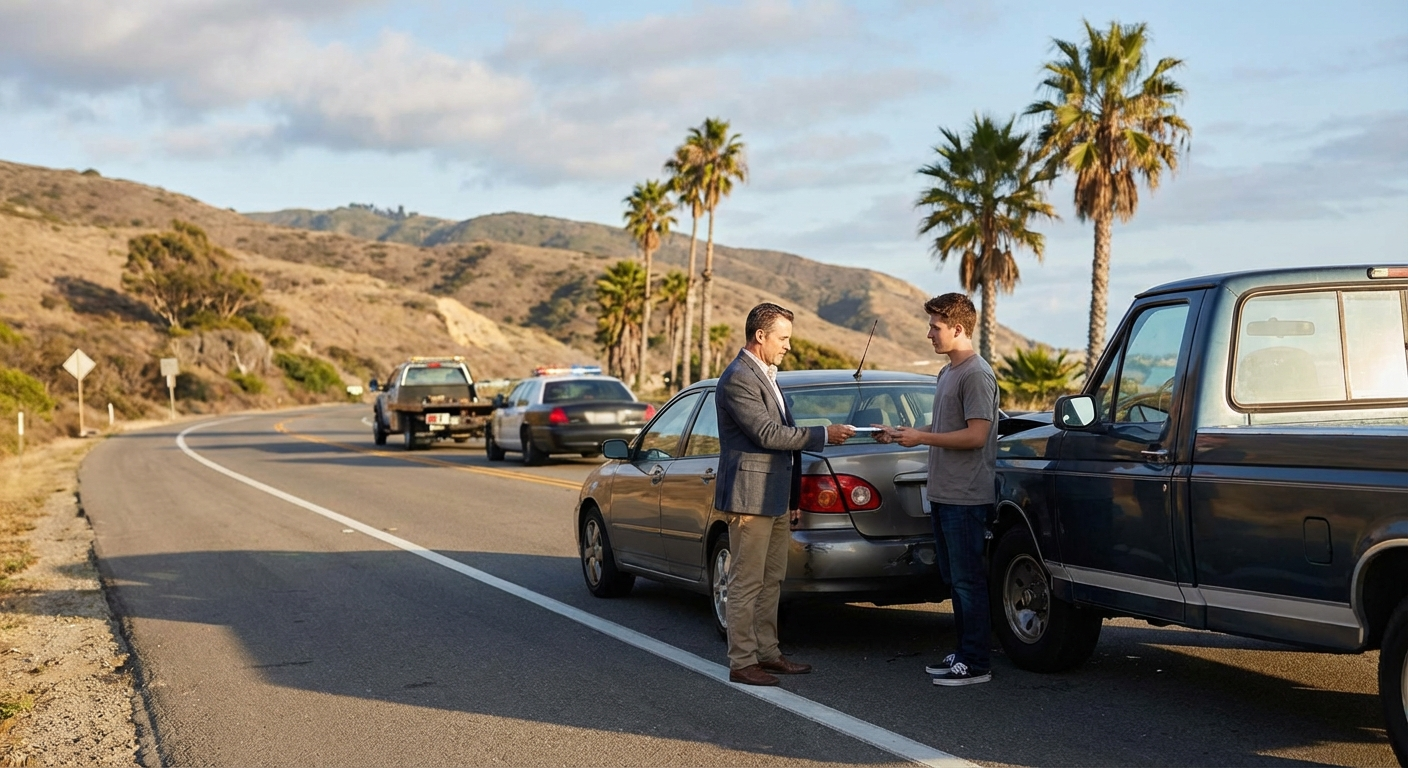
You’ve been there, right? Driving along, maybe on the 101 through Ventura County or heading east on the 60 into the Inland Empire, minding your own business. Suddenly, someone does something unpredictable. A fender bender. Or worse, a real accident. Your heart sinks. You exchange information, and that’s when it hits you: the other driver doesn’t have insurance. Or maybe they only have the bare minimum California requires—which, honestly, isn’t much.
It’s a scary thought. You carry insurance, you pay your premiums, sometimes they even jump 30-40% year over year like they have for many folks between 2022 and 2024. You expect to be protected. But what happens when the other guy isn’t playing by the same rules? This isn’t just a hypothetical. It’s a reality for far too many drivers across our state.
Feeling unprotected, maybe a little angry, is completely valid. You work hard for your money, and the idea of being stuck with medical bills or car repair costs because of someone else’s negligence—someone who didn’t bother to insure themselves properly—is infuriating. That’s where uninsured motorist coverage comes in. It’s not just another line item on your policy. It’s a shield, built specifically for those moments when the system fails you.
What Uninsured Motorist Coverage Actually Does (and Doesn’t Do)
Let’s clear up some of the confusion. Uninsured motorist (UM) coverage isn’t just one thing. It’s usually broken down into two main parts in California: Uninsured Motorist Bodily Injury (UMBI) and Uninsured Motorist Property Damage (UMPD). Both are designed to step in when the at-fault driver either has no insurance or not enough insurance to cover your damages.
The short answer is, it protects you and your car. The real answer is more complicated, and it really depends on what kind of damage you’re talking about.

Uninsured Motorist Bodily Injury (UMBI): Protecting You and Your Passengers
Imagine you’re hit by an uninsured driver. Your car’s crunched, sure, but what about you? What about your passengers? Maybe you’ve got whiplash, a broken arm, or lingering back pain. Medical bills add up fast here in California. A single emergency room visit can run into the thousands, even with decent health insurance. Then there are follow-up appointments, physical therapy, maybe even lost wages because you can’t work.
UMBI is designed to cover those costs. It pays for your medical expenses, your pain and suffering, and your lost income if the at-fault driver can’t or won’t. Think of it as your own personal injury policy that kicks in when the other person’s liability insurance is absent or insufficient. Without it, you could be left suing the at-fault driver directly—a long, expensive, and often fruitless endeavor if they don’t have assets.
Uninsured Motorist Property Damage (UMPD): Fixing Your Car When They Can’t
Okay, so your body is covered. What about your car? This is where UMPD steps in. If an uninsured driver smashes into your vehicle, UMPD will pay for the repairs to your car. Most policies come with a small deductible—often around $250—that you’d pay before your insurance covers the rest. It’s a small price to pay compared to the full cost of repairing a crumpled bumper or a wrecked engine.
You might be thinking, “But I have collision coverage!” You’re right, collision coverage would also pay for your car’s repairs in this situation. But here’s where it gets interesting. If you use your collision coverage for a hit-and-run or an uninsured driver, you’ll likely pay your full collision deductible, which could be $500 or $1,000. With UMPD, that deductible is usually much lower. Plus, filing a claim under UMPD often doesn’t affect your future premiums in the same way a collision claim might, especially if the other driver truly was uninsured.
Why California Drivers Can’t Afford to Skip This
Honestly, opting out of uninsured motorist coverage in California feels a bit like playing Russian roulette with your finances. Drivers here face a unique set of challenges. For starters, California’s minimum liability requirements are some of the lowest in the nation. We’re talking 15/30/5—that’s $15,000 for bodily injury per person, $30,000 per accident, and only $5,000 for property damage. A minor fender bender in the Valley could easily exceed that $5,000 property damage limit. And medical bills for even a moderate injury? They’ll blow past $15,000 before you even leave the hospital.
Then there’s the sheer number of drivers. With millions of cars on our freeways and city streets, the odds of encountering an uninsured or underinsured driver are higher than you might think. Some estimates suggest that over 15% of California drivers are uninsured. That’s one in every six cars you pass!
Combine that with the rising cost of, well, everything. Car repairs are more expensive, medical treatments are more expensive, and even insurance premiums have been on a steep climb. Many insurers like State Farm and Farmers have had to adjust rates significantly, and some, like AAA, have even restricted new policies in certain high-risk areas after recent devastating wildfires. This pressure means some people cut corners, leading to more uninsured drivers on the road.
Some people think it’s just another add-on they don’t need. The truth is, in a state like California, with its crowded roads and high costs, it’s one of the smartest investments you can make to protect yourself and your family.
Choosing Your Coverage: What Limits Make Sense?
When you buy UM coverage, you’ll see limits like “100/300” or “250/500.” These numbers correspond to your UMBI limits—$100,000 per person and $300,000 per accident, for example. Your UMPD limit is usually a separate number, often around $50,000 or $100,000.
So, what limits should you pick? A good rule of thumb is to match your uninsured motorist bodily injury limits to your liability limits. If you carry 100/300 liability, consider 100/300 UMBI. Why? Because if you’re responsible for an accident, your liability coverage protects others. But if someone else is responsible and they don’t have enough insurance, your UMBI protects you with the same level of care.
Think about your assets. Do you own a home in Orange County? Have significant savings? Then you probably need higher limits. You don’t want a catastrophic accident with an uninsured driver to wipe out everything you’ve worked for. Sometimes, people hesitate because higher limits mean a slightly higher premium. But wait—the difference in cost between minimum UM coverage and something more substantial is often surprisingly small, especially when you consider the peace of mind it buys.
Understanding these limits and choosing what’s right for your unique situation can be tricky. That’s why talking to someone who knows the California market inside and out is so helpful. If you’re wondering what limits are right for you, don’t guess. Get a quote and talk to an expert today.
The Difference Between UM and Collision/MedPay
It’s easy to confuse all these coverages. Let’s break it down simply:
- Collision Coverage: Pays for damage to your car if you hit something (or someone hits you) regardless of who’s at fault. It comes with a deductible.
- Medical Payments (MedPay): Pays for immediate medical expenses for you and your passengers after an accident, regardless of fault. It’s usually a smaller amount ($5,000-$10,000) and doesn’t cover lost wages or pain and suffering. It’s a quick fix for initial bills.
- Uninsured Motorist Coverage (UMBI & UMPD): This is your specific protection when the other driver is at fault but doesn’t have enough insurance. UMBI covers your medical bills, lost wages, and pain & suffering. UMPD covers your car repairs, usually with a lower deductible than collision.
So, while there’s some overlap, UM is not redundant. It fills a critical gap, making sure you don’t pay out of pocket for someone else’s mistake when they lack proper coverage.
Finding the Right Fit for Your California Life
Getting the right auto insurance in California, especially now, feels like a constant battle. Between the rising premiums, the changes insurers are making due to wildfire risks and other factors, and the sheer number of options, it’s enough to make anyone’s head spin. Perhaps you’ve been declined by an insurer, or you’re a senior driver worried about rates. Maybe you’re just tired of feeling like a number.
This is precisely why having a trusted partner matters. Someone who understands the nuances of the California market, from Prop 103’s influence on rates to the specific risks in areas like the Santa Clarita Valley or the desert communities. Someone who can sit down with you—virtually or over the phone—and really listen to your concerns, your fears, and your specific needs.
Karl Susman and the team at Save on Car Insurance California have been helping Californians just like you navigate these tricky waters for years. They get it. They know the confusion, the frustration, the feeling of being overwhelmed. With CA License #OB75129, they’re committed to finding you the right protection, including crucial uninsured motorist coverage, without trying to push you into something you don’t need.
Don’t leave your financial well-being to chance on California’s unpredictable roads. Reach out. Let’s make sure you’re truly protected. Click here to start a conversation and get your personalized quote. You can also call us directly at (877) 411-5200.
Frequently Asked Questions About Uninsured Motorist Coverage
Can I decline Uninsured Motorist coverage in California?
Yes, you can. California law requires that insurers offer UM coverage, but you have the option to formally waive it in writing. However, given the number of uninsured drivers and the high costs of accidents here, it’s generally not recommended.
Does Uninsured Motorist coverage cover hit-and-run accidents?
Yes, in most cases, Uninsured Motorist coverage does apply to hit-and-run accidents where the other driver isn’t identified. Your UMBI would cover your injuries, and your UMPD would cover your vehicle damage (with its lower deductible).
What’s the difference between Uninsured Motorist and Underinsured Motorist coverage?
Uninsured Motorist (UM) applies when the at-fault driver has NO insurance. Underinsured Motorist (UIM) applies when the at-fault driver has insurance, but their policy limits aren’t high enough to cover all your damages. In California, these are often combined into one “Uninsured/Underinsured Motorist” coverage.
Will my rates go up if I file an Uninsured Motorist claim?
Typically, no. In California, if you’re not at fault in an accident and you file a claim under your Uninsured Motorist coverage, your rates shouldn’t increase solely because of that claim. Insurance companies generally won’t penalize you for an accident that wasn’t your fault.
Is Uninsured Motorist coverage expensive?
Compared to the potential out-of-pocket costs of an accident with an uninsured driver, Uninsured Motorist coverage is usually quite affordable. The cost varies based on your location (e.g., areas with more traffic like Los Angeles vs. quieter rural areas), your driving record, and the limits you choose. Often, increasing your limits from minimum to a more protective level doesn’t add a huge amount to your premium.
This article is for informational purposes only and does not constitute financial advice.